Word Explanation
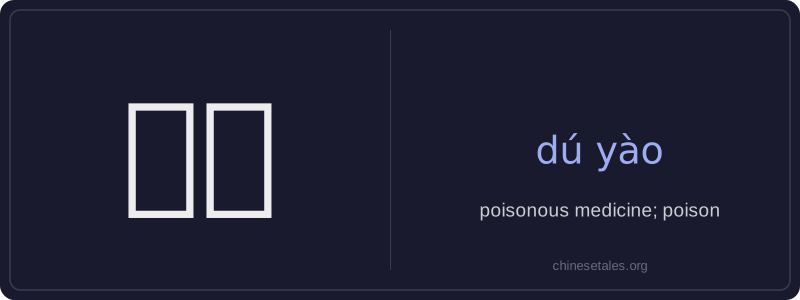
‘毒药’ literally combines ‘毒’ (dú), meaning ‘poison’ or ‘toxic’, and ‘药’ (yào), meaning ‘medicine’ or ‘drug’. Though it appears to mean ‘poisonous medicine’, in modern usage it most commonly means ‘poison’—a substance that can cause serious harm or death when ingested, inhaled, or absorbed. Unlike ‘药物’ (yàowù, ‘medicine’) which implies therapeutic intent, ‘毒药’ carries a strong negative connotation and is rarely used for legitimate pharmaceuticals—even if medically toxic, such substances are called ‘毒性药物’ (toxic drugs), not ‘毒药’.
The term appears frequently in literature, crime stories, historical accounts (e.g., imperial court intrigue), and safety education. It’s also used figuratively—for example, describing harmful habits or ideas as ‘精神毒药’ (spiritual poison). While ‘毒’ alone can mean ‘poison’ in broad contexts, ‘毒药’ specifically refers to a poisonous *substance*, often solid or liquid, intended or capable of causing fatal or severe physiological damage.
Example Sentences
Related Words
国语
‘Guó yǔ’ literally means 'national language'—
无论谁
‘无论谁’ (wú lùn shéi) is a pronoun meaning
外语
‘外语’ literally means ‘outside language’ —
面条
‘面条’ (miàn tiáo) literally means ‘flour str
认同
‘认同’ (tóng rèn) is a verb meaning ‘to ident
不对
不对 (bù duì) literally combines 不 (bù), meani
认为
‘认为’ (rèn wéi) is a transitive verb meaning
违规
违规 (wéi guī) literally means 'to violate rules