Word Explanation
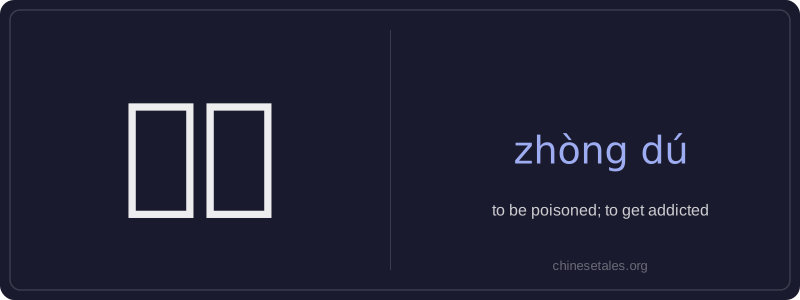
中 (zhòng) means 'to be affected by' or 'to suffer from', while 毒 (dú) means 'poison' or 'toxic substance'. Together, 中毒 literally means 'to be struck by poison' — hence 'to be poisoned'. It describes the physical condition resulting from ingesting, inhaling, or absorbing harmful substances like spoiled food, chemicals, or venom. In modern usage, it also extends metaphorically to addiction, especially in compounds like 网络中毒 (internet addiction) or 游戏中毒 (gaming addiction), where the 'poison' is a compulsive behavior.
The word is commonly used in medical contexts (e.g., food poisoning, drug overdose) and public health warnings. It can be transitive (e.g., 中毒了某种细菌) or intransitive (e.g., 他食物中毒了). Unlike many verbs, it rarely appears without the '了' particle in past-tense narrative contexts, emphasizing the onset of the condition.
Example Sentences
Related Words
国语
‘Guó yǔ’ literally means 'national language'—
无论谁
‘无论谁’ (wú lùn shéi) is a pronoun meaning
外语
‘外语’ literally means ‘outside language’ —
面条
‘面条’ (miàn tiáo) literally means ‘flour str
认同
‘认同’ (tóng rèn) is a verb meaning ‘to ident
不对
不对 (bù duì) literally combines 不 (bù), meani
认为
‘认为’ (rèn wéi) is a transitive verb meaning
违规
违规 (wéi guī) literally means 'to violate rules