Word Explanation
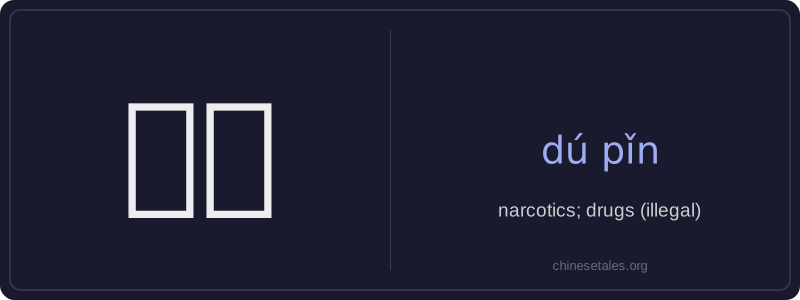
毒品 (dú pǐn) literally means 'poisonous substance' — 毒 (dú) means 'poison' or 'toxic', and 品 (pǐn) means 'substance', 'item', or 'product'. Together, the term specifically refers to illegal narcotics or controlled drugs such as heroin, cocaine, methamphetamine, and opium — substances prohibited by Chinese law due to their high potential for addiction, severe health damage, and social harm.
In modern Chinese usage, 毒品 carries strong negative connotations and is never used neutrally. It appears in formal contexts like legal documents, public health campaigns, news reports, and anti-drug education. Unlike the more general or clinical term 药物 (yàowù, 'medication'), 毒品 exclusively denotes illicit, dangerous substances — even prescription medications misused for intoxication may be classified as 毒品 under Chinese law.
Example Sentences
Related Words
国语
‘Guó yǔ’ literally means 'national language'—
无论谁
‘无论谁’ (wú lùn shéi) is a pronoun meaning
外语
‘外语’ literally means ‘outside language’ —
面条
‘面条’ (miàn tiáo) literally means ‘flour str
认同
‘认同’ (tóng rèn) is a verb meaning ‘to ident
不对
不对 (bù duì) literally combines 不 (bù), meani
认为
‘认为’ (rèn wéi) is a transitive verb meaning
违规
违规 (wéi guī) literally means 'to violate rules