Word Explanation
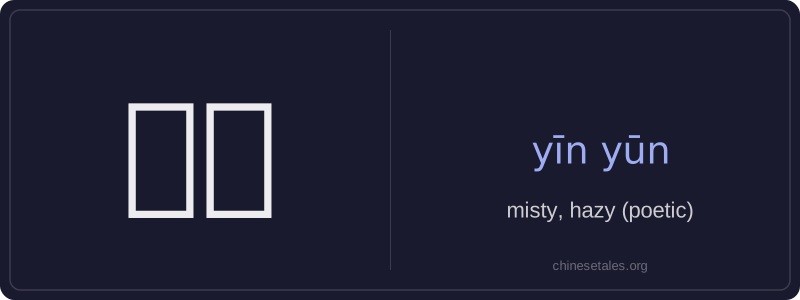
Yīn yūn is a poetic, literary adjective describing a soft, hazy, mist-laden atmosphere—often evoking ethereal beauty, quiet mystery, or gentle obscurity. Though composed of two characters (氤 and 氲), both individually rare and archaic, they function only as a fixed, inseparable compound; neither appears independently in modern usage. The character 氤 originally relates to rising vapor, while 氲 suggests swirling, diffused energy or qi—so together they convey the visual and sensory impression of mist coiling softly over mountains, lakes, or ancient temples.
This word is strongly associated with classical Chinese poetry, landscape painting descriptions, and lyrical prose. It carries an elegant, tranquil connotation—not merely 'foggy' but imbued with mood and atmosphere. You’ll rarely hear it in casual speech or weather reports; instead, it appears in travel writing, literary fiction, or scenic captions where aesthetic nuance matters more than literal clarity.
Example Sentences
Related Words
国语
‘Guó yǔ’ literally means 'national language'—
无论谁
‘无论谁’ (wú lùn shéi) is a pronoun meaning
外语
‘外语’ literally means ‘outside language’ —
面条
‘面条’ (miàn tiáo) literally means ‘flour str
认同
‘认同’ (tóng rèn) is a verb meaning ‘to ident
不对
不对 (bù duì) literally combines 不 (bù), meani
认为
‘认为’ (rèn wéi) is a transitive verb meaning
违规
违规 (wéi guī) literally means 'to violate rules