Word Explanation
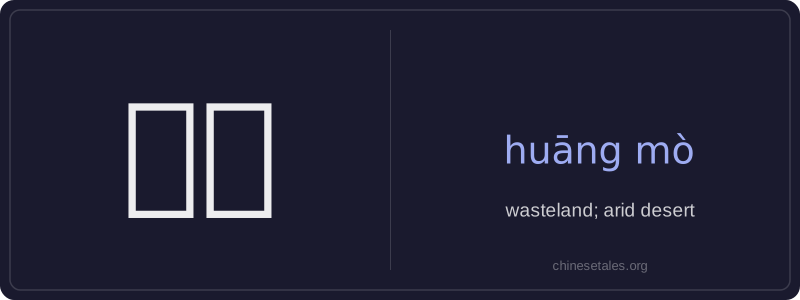
‘荒漠’ (huāng mò) is a compound noun meaning ‘wasteland’ or ‘arid desert’—a barren, dry area with little vegetation, sparse rainfall, and often shifting sand dunes. The first character 荒 (huāng) means ‘desolate,’ ‘barren,’ or ‘uncultivated,’ while the second character 漠 (mò) means ‘desert’ or ‘vast, empty expanse.’ Together, they emphasize extreme aridity and emptiness, distinguishing it from less severe dry lands like 干旱地区 (dry regions) or semi-arid grasslands.
This term carries a slightly literary or formal tone and appears frequently in geography, environmental science, and descriptive writing. It’s often used to describe remote, ecologically fragile areas in northwestern China—such as parts of Xinjiang or Inner Mongolia—where human settlement is sparse and ecological restoration efforts are underway. Unlike colloquial terms like 沙漠 (shāmò), which simply means ‘sand desert,’ 荒漠 stresses both aridity and desolation, sometimes including gravel plains or salt flats—not just sandy terrain.
Example Sentences
Related Words
国语
‘Guó yǔ’ literally means 'national language'—
无论谁
‘无论谁’ (wú lùn shéi) is a pronoun meaning
外语
‘外语’ literally means ‘outside language’ —
面条
‘面条’ (miàn tiáo) literally means ‘flour str
认同
‘认同’ (tóng rèn) is a verb meaning ‘to ident
不对
不对 (bù duì) literally combines 不 (bù), meani
认为
‘认为’ (rèn wéi) is a transitive verb meaning
违规
违规 (wéi guī) literally means 'to violate rules