Word Explanation
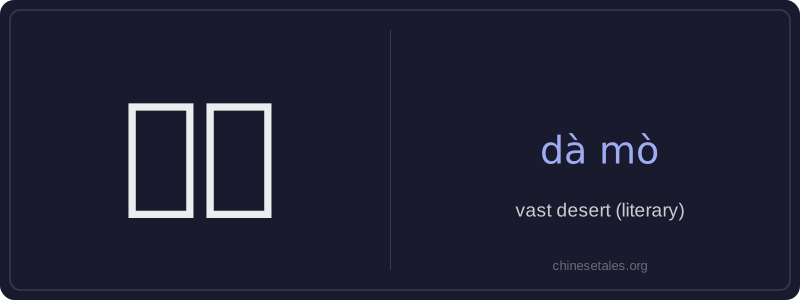
‘Dà mò’ (大漠) literally means ‘great desert’ — ‘dà’ meaning ‘big’ or ‘vast’, and ‘mò’ meaning ‘desert’ or ‘barren land’. Together, they evoke a grand, sweeping, often poetic image of an immense, arid expanse — typically the Gobi or Taklamakan deserts in northwestern China. Unlike the neutral term ‘shāmò’ (sand desert), ‘dà mò’ carries strong literary and historical resonance, frequently appearing in classical poetry, martial-arts novels, and modern lyrical prose to suggest solitude, endurance, or heroic journey.
The phrase emphasizes scale and atmosphere rather than geographical precision. It’s rarely used in everyday speech or weather reports; instead, it belongs to elevated, evocative language — often paired with imagery like ‘lonely smoke rising straight’ (孤烟直), ‘setting sun’, or ‘galloping horses’. Its tone is solemn and majestic, sometimes tinged with melancholy or awe. Learners should recognize it as a set phrase, not a compound that can be freely modified (e.g., you wouldn’t say ‘hěn dà mò’).
Example Sentences
Related Words
国语
‘Guó yǔ’ literally means 'national language'—
无论谁
‘无论谁’ (wú lùn shéi) is a pronoun meaning
外语
‘外语’ literally means ‘outside language’ —
面条
‘面条’ (miàn tiáo) literally means ‘flour str
认同
‘认同’ (tóng rèn) is a verb meaning ‘to ident
不对
不对 (bù duì) literally combines 不 (bù), meani
认为
‘认为’ (rèn wéi) is a transitive verb meaning
违规
违规 (wéi guī) literally means 'to violate rules