Word Explanation
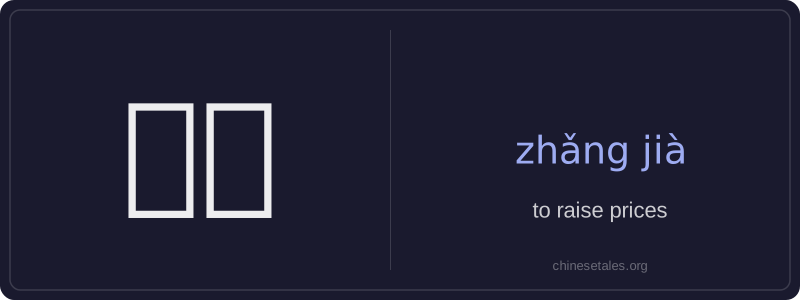
涨 (zhǎng) means 'to rise' or 'to increase', often used for water levels, prices, or emotions; 价 (jià) means 'price'. Together, 涨价 literally means 'price rises' and functions as a verb meaning 'to raise prices' or 'to increase in price'. It’s commonly used in everyday economic contexts—such as news reports, market discussions, or casual conversations about cost-of-living changes.
The word is neutral in register and widely understood across mainland China, Taiwan, and other Mandarin-speaking regions. It can be used transitively (e.g., 商家涨价了 — 'The shop raised its prices') or intransitively (e.g., 物价涨价了 — 'Prices have gone up'). Unlike some formal economic terms, 涨价 is conversational yet precise, making it essential for discussing affordability, inflation, or business decisions.
Example Sentences
Related Words
国语
‘Guó yǔ’ literally means 'national language'—
无论谁
‘无论谁’ (wú lùn shéi) is a pronoun meaning
外语
‘外语’ literally means ‘outside language’ —
面条
‘面条’ (miàn tiáo) literally means ‘flour str
认同
‘认同’ (tóng rèn) is a verb meaning ‘to ident
不对
不对 (bù duì) literally combines 不 (bù), meani
认为
‘认为’ (rèn wéi) is a transitive verb meaning
违规
违规 (wéi guī) literally means 'to violate rules