Word Explanation
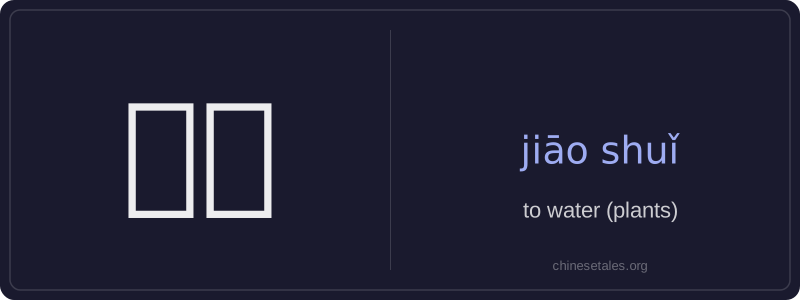
‘Jiāo shuǐ’ literally means ‘to pour water’ — the character 浇 (jiāo) means ‘to pour, to irrigate’, and 水 (shuǐ) means ‘water’. Together, they form a common verb meaning ‘to water (plants)’, describing the act of applying water to soil or roots to help plants grow. It’s used almost exclusively in horticultural or domestic gardening contexts — not for drinking, washing, or other water-related actions.
This is a separable verb: the object (e.g., the plant or location) usually comes after it, as in ‘给花浇水’ (to water the flowers), and aspect particles like 了 or 着 can be inserted between the two characters (e.g., 浇了水, 浇着水). It’s neutral in register — appropriate for everyday speech, textbooks, and instructions — and frequently appears in routines involving plant care, farming, or classroom science activities.
Example Sentences
Related Words
国语
‘Guó yǔ’ literally means 'national language'—
无论谁
‘无论谁’ (wú lùn shéi) is a pronoun meaning
外语
‘外语’ literally means ‘outside language’ —
面条
‘面条’ (miàn tiáo) literally means ‘flour str
认同
‘认同’ (tóng rèn) is a verb meaning ‘to ident
不对
不对 (bù duì) literally combines 不 (bù), meani
认为
‘认为’ (rèn wéi) is a transitive verb meaning
违规
违规 (wéi guī) literally means 'to violate rules