Word Explanation
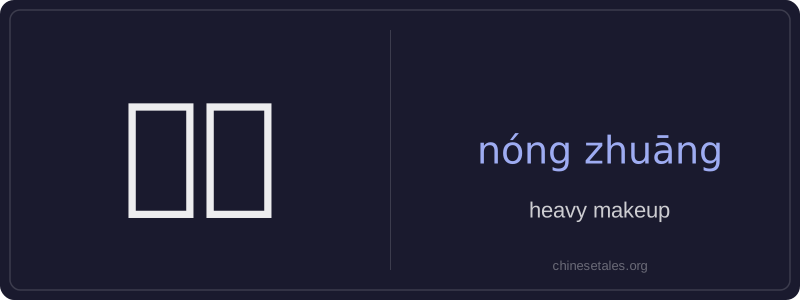
‘浓妆’ literally combines ‘浓’ (nóng), meaning ‘thick,’ ‘intense,’ or ‘strong,’ and ‘妆’ (zhuāng), meaning ‘makeup’ or ‘cosmetic application.’ Together, they refer to makeup that is bold, highly visible, and deliberately emphasized—often involving dark eyeliner, vivid lipstick, heavy foundation, and dramatic contouring. It contrasts sharply with ‘淡妆’ (light makeup) and implies intentional artistry or theatricality rather than subtlety.
This term is commonly used in contexts like fashion shows, stage performances, festive occasions (e.g., weddings or Lunar New Year banquets), or celebrity appearances. While not inherently negative, it can carry connotations of formality, confidence, or sometimes artificiality—depending on context and speaker attitude. In everyday speech, it’s more descriptive than evaluative, though tone and context may imply judgment (e.g., ‘她今天化了浓妆’ could simply state a fact or subtly suggest she looks unusually dressed up).
Example Sentences
Related Words
国语
‘Guó yǔ’ literally means 'national language'—
无论谁
‘无论谁’ (wú lùn shéi) is a pronoun meaning
外语
‘外语’ literally means ‘outside language’ —
面条
‘面条’ (miàn tiáo) literally means ‘flour str
认同
‘认同’ (tóng rèn) is a verb meaning ‘to ident
不对
不对 (bù duì) literally combines 不 (bù), meani
认为
‘认为’ (rèn wéi) is a transitive verb meaning
违规
违规 (wéi guī) literally means 'to violate rules