Word Explanation
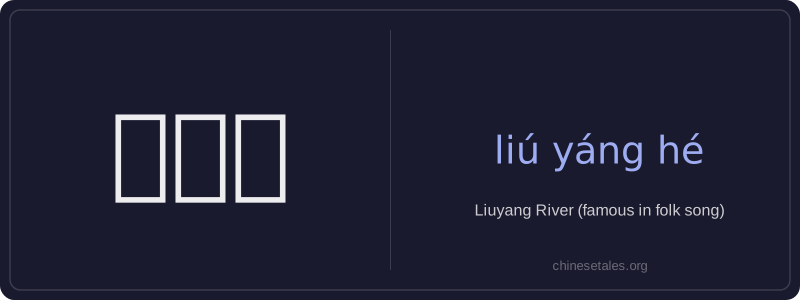
The Liuyang River (Liúyáng Hé) is a real river in Hunan Province, China, flowing through the city of Liuyang and into the Xiang River. Its name combines three characters: 浏 (liú), a proper noun component historically tied to the region; 阳 (yáng), meaning 'sunny' or 'south-facing'—a common element in Chinese place names referring to the sunny (south) bank of a river; and 河 (hé), meaning 'river'. Together, they form a geographical proper noun.
This river is especially famous due to the beloved folk song 'Liuyang River', composed in the 1950s, which praises its beauty and symbolizes hometown affection and revolutionary optimism. As a result, the term often evokes cultural nostalgia and regional pride—not just hydrology. It appears in literature, music, tourism promotions, and local identity discourse, but is rarely used in technical or scientific contexts without cultural framing.
Example Sentences
Related Words
国语
‘Guó yǔ’ literally means 'national language'—
无论谁
‘无论谁’ (wú lùn shéi) is a pronoun meaning
外语
‘外语’ literally means ‘outside language’ —
面条
‘面条’ (miàn tiáo) literally means ‘flour str
认同
‘认同’ (tóng rèn) is a verb meaning ‘to ident
不对
不对 (bù duì) literally combines 不 (bù), meani
认为
‘认为’ (rèn wéi) is a transitive verb meaning
违规
违规 (wéi guī) literally means 'to violate rules