Word Explanation
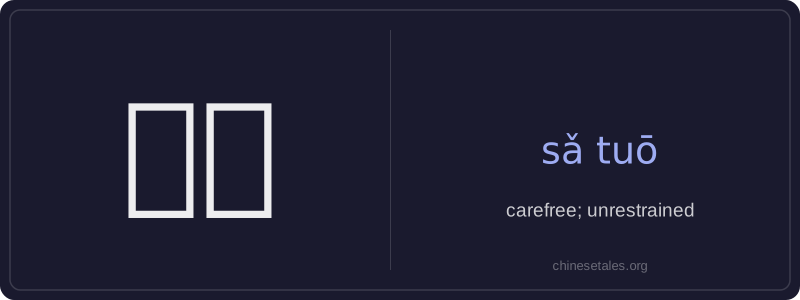
洒脱 (sǎ tuō) describes a person’s demeanor or attitude—free-spirited, unburdened by convention or excessive self-consciousness, and gracefully unrestrained. The character 洒 suggests looseness, spontaneity, and natural flow (like water being sprinkled freely), while 脱 conveys shedding, letting go, or breaking free—literally 'to detach' or 'to cast off'. Together, they evoke the image of someone who has shed social pretense, inner rigidity, or unnecessary attachments, moving through life with lightness and authenticity.
This word is often used to praise admired personal qualities—especially in artistic, intellectual, or mature contexts—such as a musician’s improvisational ease, a writer’s bold stylistic choices, or an elder’s serene acceptance of life’s changes. It carries positive connotations of confidence, elegance, and inner freedom—not recklessness or indifference, but thoughtful liberation.
Example Sentences
Related Words
国语
‘Guó yǔ’ literally means 'national language'—
无论谁
‘无论谁’ (wú lùn shéi) is a pronoun meaning
外语
‘外语’ literally means ‘outside language’ —
面条
‘面条’ (miàn tiáo) literally means ‘flour str
认同
‘认同’ (tóng rèn) is a verb meaning ‘to ident
不对
不对 (bù duì) literally combines 不 (bù), meani
认为
‘认为’ (rèn wéi) is a transitive verb meaning
违规
违规 (wéi guī) literally means 'to violate rules