Word Explanation
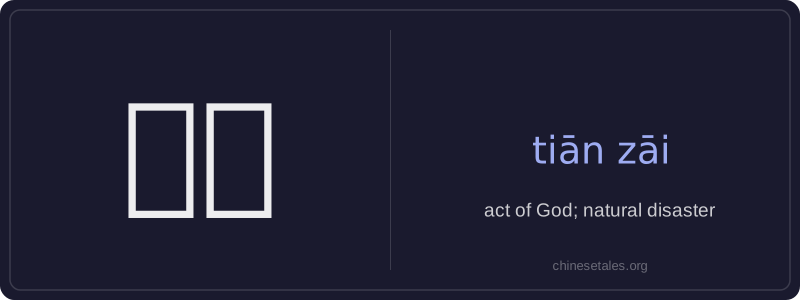
‘天灾’ literally means ‘heaven’s calamity’ — combining 天 (tiān, ‘heaven’ or ‘sky’) and 灾 (zāi, ‘disaster’ or ‘calamity’). Historically, it reflects the traditional Chinese worldview that natural disasters originate from cosmic or heavenly forces beyond human control. Today, it refers specifically to large-scale natural disasters such as earthquakes, floods, typhoons, droughts, and volcanic eruptions — events caused by natural processes, not human action.
The term carries a formal, slightly literary tone and is commonly used in news reports, government announcements, disaster relief contexts, and academic discussions. It contrasts with 人祸 (rén huò, ‘man-made disaster’), emphasizing the non-human, uncontrollable origin of the event. While ‘act of God’ is a common English equivalent in legal and insurance contexts, ‘natural disaster’ is more widely understood and neutral in everyday usage.
Example Sentences
Related Words
国语
‘Guó yǔ’ literally means 'national language'—
无论谁
‘无论谁’ (wú lùn shéi) is a pronoun meaning
外语
‘外语’ literally means ‘outside language’ —
面条
‘面条’ (miàn tiáo) literally means ‘flour str
认同
‘认同’ (tóng rèn) is a verb meaning ‘to ident
不对
不对 (bù duì) literally combines 不 (bù), meani
认为
‘认为’ (rèn wéi) is a transitive verb meaning
违规
违规 (wéi guī) literally means 'to violate rules