Word Explanation
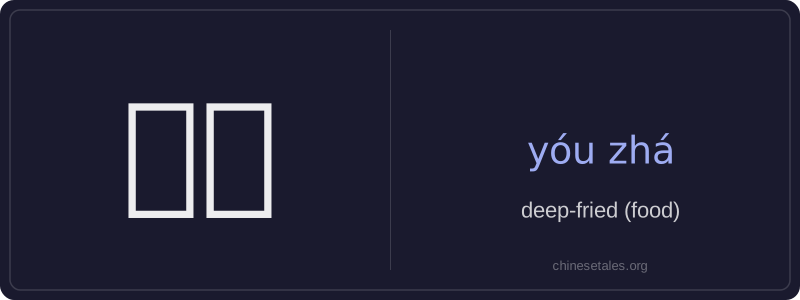
油炸 (yóu zhá) literally means 'oil-fried' and functions primarily as an adjective describing food that has been cooked by submerging it in hot oil — what English speakers call 'deep-fried'. The first character 油 (yóu) means 'oil', and the second 炸 (zhá) is a verb meaning 'to deep-fry' or 'to fry in oil'. Together, they form a compound that modifies nouns — for example, 油炸食品 (yóu zhá shípǐn), meaning 'deep-fried food'. It’s commonly used in menus, cooking instructions, and health discussions.
This term emphasizes the cooking method rather than ingredients, so it applies to many foods — from tofu and spring rolls to chicken and fish. While 炸 alone can mean 'to fry', adding 油 makes the phrase more specific and formal, especially in written contexts like food labels or restaurant descriptions. It’s neutral in register but often carries a slight connotation of being less healthy due to high oil content.
Example Sentences
Related Words
国语
‘Guó yǔ’ literally means 'national language'—
无论谁
‘无论谁’ (wú lùn shéi) is a pronoun meaning
外语
‘外语’ literally means ‘outside language’ —
面条
‘面条’ (miàn tiáo) literally means ‘flour str
认同
‘认同’ (tóng rèn) is a verb meaning ‘to ident
不对
不对 (bù duì) literally combines 不 (bù), meani
认为
‘认为’ (rèn wéi) is a transitive verb meaning
违规
违规 (wéi guī) literally means 'to violate rules