Word Explanation
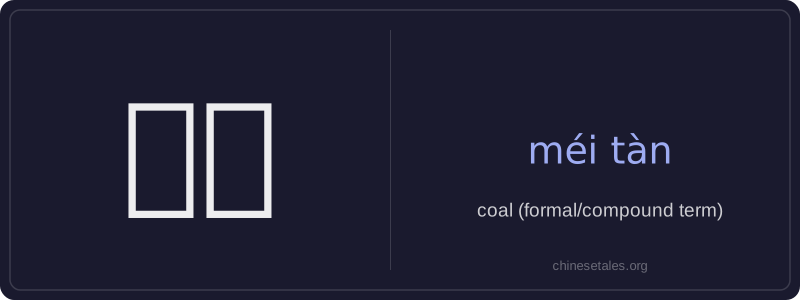
Coal is a black or brown combustible sedimentary rock formed from ancient plant matter buried and compressed over millions of years. In Chinese, 煤炭 (méi tàn) is the formal, standard compound noun for 'coal' — it’s more commonly used in written contexts, official reports, energy discussions, and academic or industrial settings than the standalone character 煤. The first character 煤 means 'coal' on its own and carries the core semantic meaning; the second character 炭 means 'charcoal' or 'carbon-based fuel', reinforcing the idea of a carbon-rich, burnable material.
This compound reflects a common pattern in Chinese where two semantically related characters combine to form a precise, unambiguous technical term. While 煤 can sometimes be used alone in informal speech (e.g., 煤很便宜), 煤炭 is preferred when referring to coal as a natural resource, commodity, or energy source — especially in policy, mining, environmental science, or economic reporting.
Example Sentences
Related Words
国语
‘Guó yǔ’ literally means 'national language'—
无论谁
‘无论谁’ (wú lùn shéi) is a pronoun meaning
外语
‘外语’ literally means ‘outside language’ —
面条
‘面条’ (miàn tiáo) literally means ‘flour str
认同
‘认同’ (tóng rèn) is a verb meaning ‘to ident
不对
不对 (bù duì) literally combines 不 (bù), meani
认为
‘认为’ (rèn wéi) is a transitive verb meaning
违规
违规 (wéi guī) literally means 'to violate rules