Word Explanation
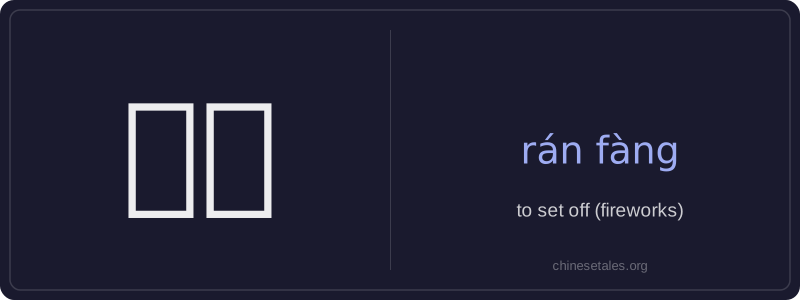
燃放 is a compound verb meaning 'to set off (fireworks or firecrackers)'. It combines two characters: 燃 (rán), meaning 'to burn' or 'to ignite', and 放 (fàng), meaning 'to release' or 'to let go'. Together, they vividly describe the action of igniting and releasing pyrotechnics into the air. This word is almost exclusively used for fireworks and firecrackers—not for other kinds of burning or releasing—and carries a festive, celebratory connotation.
You’ll hear 燃放 most often during holidays like Chinese New Year, National Day, or weddings, where fireworks symbolize joy and good fortune. It’s commonly paired with nouns like 烟花 (yānhuā, 'fireworks'), 鞭炮 (biānpào, 'firecrackers'), or 礼花 (lǐhuā, 'ceremonial fireworks'). While it can appear in both formal announcements and casual speech, its usage is tightly bound to controlled, intentional ignition—not accidental fires or general combustion.
Example Sentences
Related Words
国语
‘Guó yǔ’ literally means 'national language'—
无论谁
‘无论谁’ (wú lùn shéi) is a pronoun meaning
外语
‘外语’ literally means ‘outside language’ —
面条
‘面条’ (miàn tiáo) literally means ‘flour str
认同
‘认同’ (tóng rèn) is a verb meaning ‘to ident
不对
不对 (bù duì) literally combines 不 (bù), meani
认为
‘认为’ (rèn wéi) is a transitive verb meaning
违规
违规 (wéi guī) literally means 'to violate rules