Word Explanation
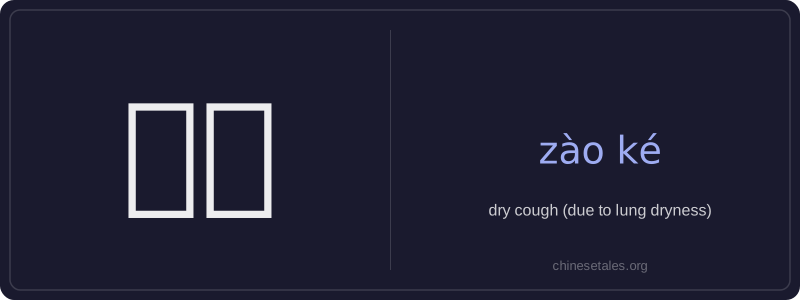
‘Zào ké’ literally means ‘dry cough’ and refers specifically to a type of cough in Traditional Chinese Medicine (TCM) caused by dryness affecting the lungs—often due to external dry weather, internal yin deficiency, or prolonged illness. The character 燥 (zào) means ‘dry’ or ‘dryness’, indicating an imbalance where body fluids are insufficient; 咳 (ké) means ‘cough’. Together, they describe a cough that is non-productive—without phlegm—and often accompanied by symptoms like a sore throat, thirst, dry nose, or itchy chest.
This term is commonly used in clinical TCM contexts, health consultations, and herbal medicine prescriptions. It contrasts with ‘wet cough’ (湿咳, shī ké), which involves mucus. Patients may be advised to avoid spicy or fried foods and to consume moistening foods like pear or loquat syrup. While modern Western medicine might diagnose this as ‘irritant cough’ or ‘post-viral cough’, TCM treats it by nourishing lung yin and clearing dryness.
Example Sentences
Related Words
国语
‘Guó yǔ’ literally means 'national language'—
无论谁
‘无论谁’ (wú lùn shéi) is a pronoun meaning
外语
‘外语’ literally means ‘outside language’ —
面条
‘面条’ (miàn tiáo) literally means ‘flour str
认同
‘认同’ (tóng rèn) is a verb meaning ‘to ident
不对
不对 (bù duì) literally combines 不 (bù), meani
认为
‘认为’ (rèn wéi) is a transitive verb meaning
违规
违规 (wéi guī) literally means 'to violate rules