Word Explanation
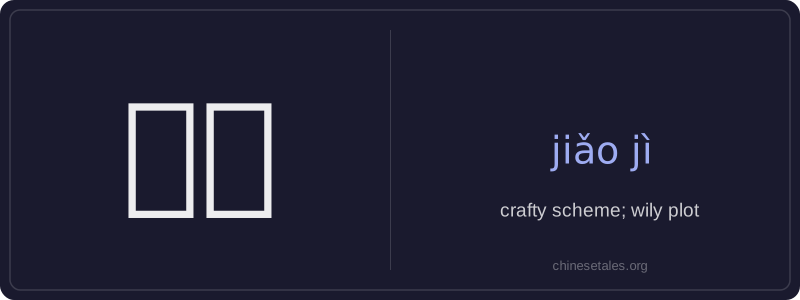
‘狡计’ is a compound noun meaning a crafty, deceitful, or underhanded scheme—often one devised to gain advantage through trickery rather than honesty or strength. The first character 狡 (jiǎo) means ‘crafty’ or ‘sly’, historically associated with foxes (a classic symbol of cunning in Chinese folklore and literature), while 计 (jì) means ‘plan’, ‘scheme’, or ‘strategy’. Together, they emphasize not just any plan, but one marked by guile and concealment.
This word carries a strongly negative connotation and is typically used in formal or literary contexts—such as historical narratives, political commentary, or moralistic writing—to describe manipulative tactics by villains, corrupt officials, or untrustworthy individuals. It is rarely used in casual speech and never in neutral or positive contexts; even describing a clever prank as ‘狡计’ would sound overly harsh or sarcastic.
Example Sentences
Related Words
国语
‘Guó yǔ’ literally means 'national language'—
无论谁
‘无论谁’ (wú lùn shéi) is a pronoun meaning
外语
‘外语’ literally means ‘outside language’ —
面条
‘面条’ (miàn tiáo) literally means ‘flour str
认同
‘认同’ (tóng rèn) is a verb meaning ‘to ident
不对
不对 (bù duì) literally combines 不 (bù), meani
认为
‘认为’ (rèn wéi) is a transitive verb meaning
违规
违规 (wéi guī) literally means 'to violate rules