Word Explanation
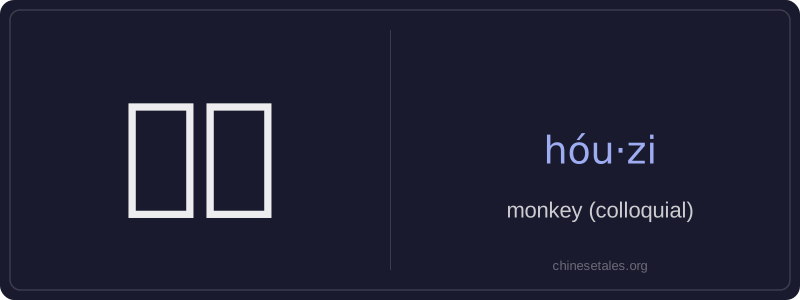
‘猴子’ (hóu·zi) is the most common colloquial term for ‘monkey’ in Mandarin Chinese. It consists of two characters: 猴 (hóu), which by itself means ‘monkey’ and functions as the semantic root, and 子 (zi), a diminutive or nominalizing suffix that adds a familiar, informal, or sometimes affectionate tone. Unlike the more formal or literary word 猿 (yuán), which refers to apes or higher primates, ‘猴子’ specifically denotes monkeys — especially smaller, long-tailed, arboreal species — and is widely used in everyday speech, children’s language, idioms, and storytelling.
The term appears frequently in cultural contexts, such as the Monkey King (孙悟空, Sūn Wùkōng) from *Journey to the West*, where he is often affectionately or teasingly called ‘那猴子’ (nà hóu·zi, ‘that monkey’). It can also carry playful or mildly teasing connotations when describing someone’s mischievous or restless behavior — e.g., ‘他像只猴子一样跳来跳去’ (He jumps around like a monkey). Though not derogatory by default, tone and context determine whether it’s endearing or slightly mocking.
Example Sentences
Related Words
国语
‘Guó yǔ’ literally means 'national language'—
无论谁
‘无论谁’ (wú lùn shéi) is a pronoun meaning
外语
‘外语’ literally means ‘outside language’ —
面条
‘面条’ (miàn tiáo) literally means ‘flour str
认同
‘认同’ (tóng rèn) is a verb meaning ‘to ident
不对
不对 (bù duì) literally combines 不 (bù), meani
认为
‘认为’ (rèn wéi) is a transitive verb meaning
违规
违规 (wéi guī) literally means 'to violate rules