Word Explanation
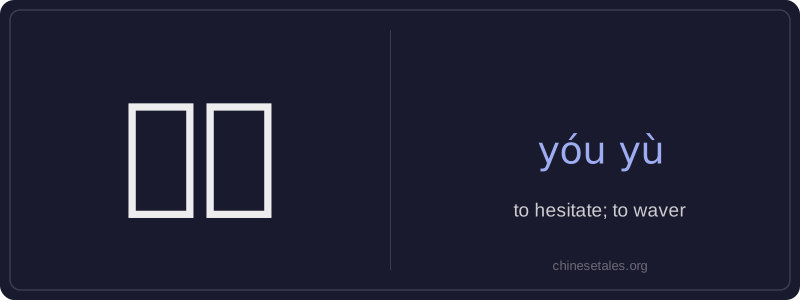
犹豫 (yóu yù) is a verb meaning 'to hesitate' or 'to waver' — to feel uncertain or conflicted before making a decision or taking action. Though it looks like a compound of two characters, 犹 and 豫 are not used independently in modern Mandarin with this meaning; together they form an inseparable lexical unit. Historically, both characters originally referred to types of animals (a type of monkey and a large antelope-like creature), and their combination evokes the image of an animal pausing warily — hence the sense of indecision.
This word describes an internal emotional state rather than physical delay. It often appears in contexts involving choices, commitments, or moral dilemmas — for example, hesitating before speaking up, accepting an offer, or acting on one’s conscience. It carries a slightly formal or literary tone and is common in written Chinese and thoughtful spoken discourse, but less frequent in casual, rapid conversation where simpler alternatives like 拿不定主意 may be preferred.
Example Sentences
Related Words
国语
‘Guó yǔ’ literally means 'national language'—
无论谁
‘无论谁’ (wú lùn shéi) is a pronoun meaning
外语
‘外语’ literally means ‘outside language’ —
面条
‘面条’ (miàn tiáo) literally means ‘flour str
认同
‘认同’ (tóng rèn) is a verb meaning ‘to ident
不对
不对 (bù duì) literally combines 不 (bù), meani
认为
‘认为’ (rèn wéi) is a transitive verb meaning
违规
违规 (wéi guī) literally means 'to violate rules