Word Explanation
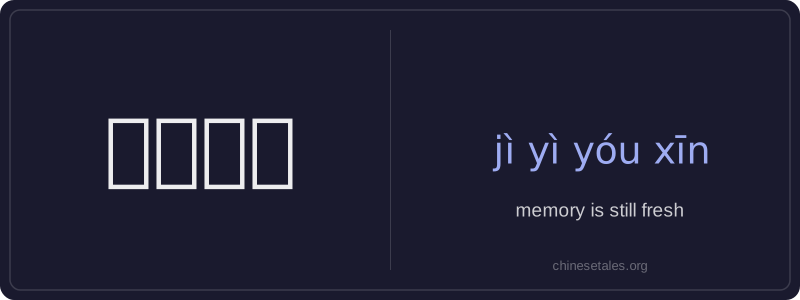
‘记忆犹新’ literally means ‘memory still new’ — it describes a vivid, emotionally resonant recollection that feels as clear and immediate as if it happened just now. The four characters combine meaningfully: 记 (to record) and 忆 (to recall) together form ‘memory’; 犹 (still, yet) conveys continuity; 新 (new, fresh) emphasizes the undiminished clarity and emotional intensity of the memory. It’s not used for trivial or routine memories, but for significant personal experiences — often joyful, shocking, or poignant events that left a lasting impression.
This idiom is formal and literary, commonly found in written Chinese, speeches, essays, and reflective storytelling. It functions grammatically as a noun or predicate adjective — typically following subjects like ‘这件事’ (this event) or ‘那段时光’ (that period), and often preceded by verbs like ‘令人’ (makes one), ‘让人’ (causes people to), or ‘仍’ (still). It carries a tone of sincerity and depth, rarely used in casual conversation unless deliberately evoking solemnity or nostalgia.
Example Sentences
Related Words
国语
‘Guó yǔ’ literally means 'national language'—
无论谁
‘无论谁’ (wú lùn shéi) is a pronoun meaning
外语
‘外语’ literally means ‘outside language’ —
面条
‘面条’ (miàn tiáo) literally means ‘flour str
认同
‘认同’ (tóng rèn) is a verb meaning ‘to ident
不对
不对 (bù duì) literally combines 不 (bù), meani
认为
‘认为’ (rèn wéi) is a transitive verb meaning
违规
违规 (wéi guī) literally means 'to violate rules