Word Explanation
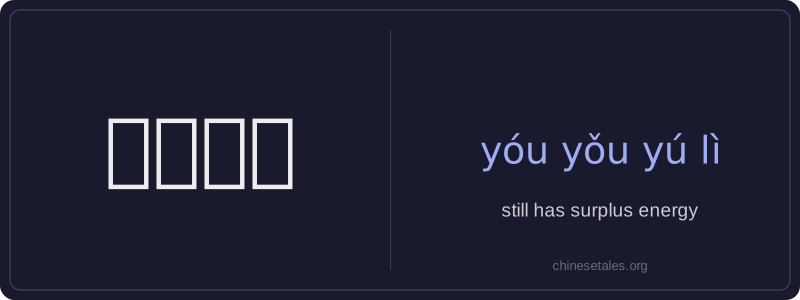
‘犹有余力’ literally means ‘still has surplus strength/energy’ — it describes a person who completes a task easily and still has energy left over, implying remarkable capability, stamina, or efficiency. The four characters combine as: 犹 (‘still, yet’), 有 (‘has’), 余 (‘remaining, surplus’), and 力 (‘strength, energy’). Together, they form an idiomatic expression that emphasizes effortless competence rather than mere physical power.
This phrase is commonly used in formal or literary contexts — such as essays, speeches, or performance evaluations — to praise someone’s exceptional capacity. It often appears after describing an accomplishment, highlighting how the person handled difficulty with ease. While it can describe physical endurance, it’s more frequently applied to mental effort, time management, or multitasking ability — for example, excelling at work while maintaining hobbies or family life.
Example Sentences
Related Words
国语
‘Guó yǔ’ literally means 'national language'—
无论谁
‘无论谁’ (wú lùn shéi) is a pronoun meaning
外语
‘外语’ literally means ‘outside language’ —
面条
‘面条’ (miàn tiáo) literally means ‘flour str
认同
‘认同’ (tóng rèn) is a verb meaning ‘to ident
不对
不对 (bù duì) literally combines 不 (bù), meani
认为
‘认为’ (rèn wéi) is a transitive verb meaning
违规
违规 (wéi guī) literally means 'to violate rules