Word Explanation
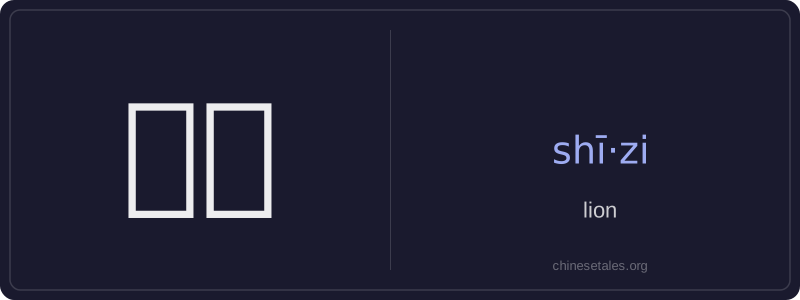
狮子 (shī·zi) is the standard Mandarin word for 'lion', a large wild cat native to Africa and parts of India. The first character 狮 (shī) specifically denotes 'lion' and is rarely used alone in modern speech; it appears almost exclusively in this compound. The second character 子 (zi) is a common nominal suffix that adds a concrete, countable noun quality — similar to how it functions in words like 桌子 (zhuō·zi, 'table') or 孩子 (hái·zi, 'child'). Together, 狮子 forms a complete, standalone noun meaning 'lion'.
This word is used in everyday contexts — from children’s books and zoo visits to idioms like 狮子大开口 (shī·zi dà kāi kǒu, 'to ask for an exorbitant price') and cultural references such as stone lion statues (石狮子, shí shī·zi) guarding temple or palace gates in traditional Chinese architecture. It carries no inherent honorific or diminutive connotation, making it neutral and widely appropriate across registers.
Example Sentences
Related Words
国语
‘Guó yǔ’ literally means 'national language'—
无论谁
‘无论谁’ (wú lùn shéi) is a pronoun meaning
外语
‘外语’ literally means ‘outside language’ —
面条
‘面条’ (miàn tiáo) literally means ‘flour str
认同
‘认同’ (tóng rèn) is a verb meaning ‘to ident
不对
不对 (bù duì) literally combines 不 (bù), meani
认为
‘认为’ (rèn wéi) is a transitive verb meaning
违规
违规 (wéi guī) literally means 'to violate rules