Word Explanation
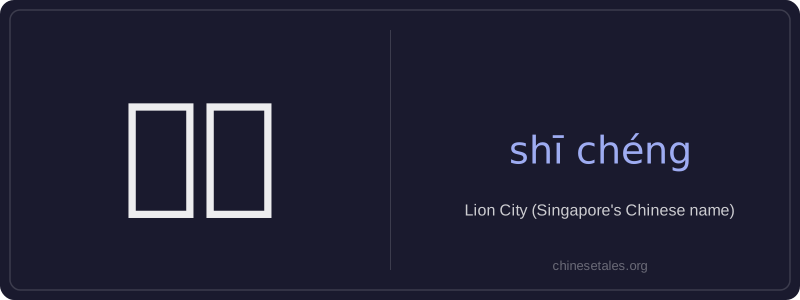
‘狮城’ (shī chéng) literally means ‘Lion City’ and is the widely accepted Chinese name for Singapore. The term originates from a legendary account in which a Sumatran prince saw a lion-like animal upon landing on the island in the 13th century—though lions have never inhabited Singapore, the sighting led to the name ‘Singapura’ in Sanskrit (‘simha’ meaning lion, ‘pura’ meaning city), later adapted into Chinese as 狮城. Both characters contribute directly: 狮 (shī) means ‘lion’, and 城 (chéng) means ‘city’ or ‘walled town’.
This term is used almost exclusively in formal, literary, or media contexts—not in everyday spoken Mandarin when referring to Singapore casually (where 新加坡 xīn jiā pō is standard). It carries a poetic, historical, or symbolic resonance, often appearing in official slogans, tourism promotions, academic writing, or cultural commentary about Singapore’s identity and heritage.
Example Sentences
Related Words
国语
‘Guó yǔ’ literally means 'national language'—
无论谁
‘无论谁’ (wú lùn shéi) is a pronoun meaning
外语
‘外语’ literally means ‘outside language’ —
面条
‘面条’ (miàn tiáo) literally means ‘flour str
认同
‘认同’ (tóng rèn) is a verb meaning ‘to ident
不对
不对 (bù duì) literally combines 不 (bù), meani
认为
‘认为’ (rèn wéi) is a transitive verb meaning
违规
违规 (wéi guī) literally means 'to violate rules