Word Explanation
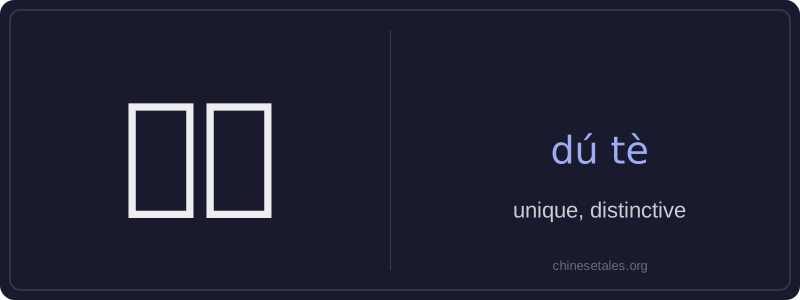
独特 (dú tè) is an adjective meaning 'unique' or 'distinctive'—emphasizing something that stands out clearly from others due to its special, one-of-a-kind qualities. The character 独 (dú) means 'alone' or 'sole', while 特 (tè) means 'special' or 'particular'; together, they reinforce the idea of singular, inherent distinctiveness—not just different, but meaningfully and recognizably so. It often carries a positive connotation, suggesting admirable originality or natural rarity.
This word is commonly used to describe features, styles, personalities, cultural traits, or biological characteristics—especially in contexts where uniqueness implies value or authenticity. For example, it’s frequently applied to animal species with unusual adaptations (e.g., the pangolin’s scales or the axolotl’s regeneration ability), regional cuisines, traditional crafts, or individual talents. Unlike generic terms like 不同 (bù tóng, 'different'), 独特 stresses intrinsic, qualitative singularity rather than mere contrast.
Example Sentences
Related Words
国语
‘Guó yǔ’ literally means 'national language'—
无论谁
‘无论谁’ (wú lùn shéi) is a pronoun meaning
外语
‘外语’ literally means ‘outside language’ —
面条
‘面条’ (miàn tiáo) literally means ‘flour str
认同
‘认同’ (tóng rèn) is a verb meaning ‘to ident
不对
不对 (bù duì) literally combines 不 (bù), meani
认为
‘认为’ (rèn wéi) is a transitive verb meaning
违规
违规 (wéi guī) literally means 'to violate rules