Word Explanation
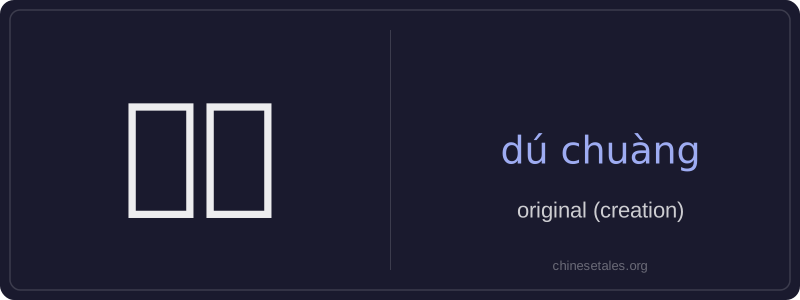
‘独创’ (dú chuàng) literally combines 独 (dú), meaning 'alone' or 'sole', and 创 (chuàng), meaning 'to create' or 'to invent'. Together, it conveys the idea of something that is independently conceived—original, novel, and not copied from others. It emphasizes uniqueness arising from personal insight or effort, rather than imitation or convention.
This word is commonly used to describe works of art, literary pieces, scientific theories, business strategies, or teaching methods that display distinctive innovation. While it can function as a noun ('a独创'), it more frequently serves as an adjective modifying nouns (e.g., 独创性 ‘originality’, 独创精神 ‘spirit of original creation’). It carries a positive, respectful connotation and often appears in formal or intellectual contexts—such as academic writing, design reviews, or cultural criticism—where authenticity and independent thinking are valued.
Example Sentences
Related Words
国语
‘Guó yǔ’ literally means 'national language'—
无论谁
‘无论谁’ (wú lùn shéi) is a pronoun meaning
外语
‘外语’ literally means ‘outside language’ —
面条
‘面条’ (miàn tiáo) literally means ‘flour str
认同
‘认同’ (tóng rèn) is a verb meaning ‘to ident
不对
不对 (bù duì) literally combines 不 (bù), meani
认为
‘认为’ (rèn wéi) is a transitive verb meaning
违规
违规 (wéi guī) literally means 'to violate rules