Word Explanation
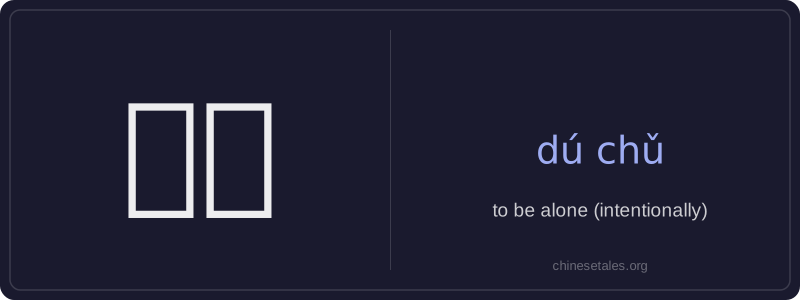
独处 means 'to be alone' — but specifically in a deliberate, intentional, and often positive or reflective way. The character 独 (dú) means 'alone' or 'solitary', emphasizing uniqueness or singularity; 处 (chǔ) means 'to be present', 'to stay', or 'to dwell'. Together, they convey the idea of choosing to spend time by oneself—not out of loneliness or isolation, but for rest, introspection, creativity, or emotional recharge. This word carries a neutral-to-positive connotation in Chinese, commonly associated with self-care, mindfulness, or personal growth.
Unlike generic words for 'being alone' like 自己一个人 (zìjǐ yí gè rén), 独处 implies agency and purpose. It’s frequently used in discussions about mental well-being, work-life balance, or artistic practice. You’ll see it in psychology articles, lifestyle blogs, and conversations about healthy boundaries — never in contexts implying abandonment or exclusion.
Example Sentences
Related Words
国语
‘Guó yǔ’ literally means 'national language'—
无论谁
‘无论谁’ (wú lùn shéi) is a pronoun meaning
外语
‘外语’ literally means ‘outside language’ —
面条
‘面条’ (miàn tiáo) literally means ‘flour str
认同
‘认同’ (tóng rèn) is a verb meaning ‘to ident
不对
不对 (bù duì) literally combines 不 (bù), meani
认为
‘认为’ (rèn wéi) is a transitive verb meaning
违规
违规 (wéi guī) literally means 'to violate rules