Word Explanation
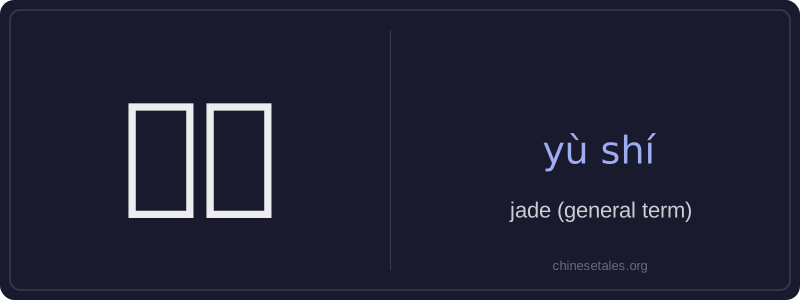
‘Yù shí’ is a general term for jade in Chinese, encompassing both nephrite and jadeite—two distinct minerals prized for their beauty, durability, and cultural significance. The character 玉 (yù) means 'jade' or 'precious stone' and carries connotations of purity, virtue, and nobility in classical Chinese thought; 石 (shí) means 'stone' and grounds the term in its physical, mineral nature. Together, 玉石 emphasizes jade’s dual identity: as a culturally revered material and as a natural geological substance.
This word appears frequently in contexts related to craftsmanship, antiques, jewelry, and traditional symbolism—for example, in phrases like ‘玉石俱焚’ (yù shí jù fén, ‘jade and stone burn together’, meaning ‘to destroy the good with the bad’) or when describing raw materials in carving workshops. Unlike the more specific terms 翡翠 (fěicuì, ‘jadeite’) or 软玉 (ruǎn yù, ‘nephrite’), 玉石 is broad and often used in formal, literary, or descriptive settings rather than casual conversation.
Example Sentences
Related Words
国语
‘Guó yǔ’ literally means 'national language'—
无论谁
‘无论谁’ (wú lùn shéi) is a pronoun meaning
外语
‘外语’ literally means ‘outside language’ —
面条
‘面条’ (miàn tiáo) literally means ‘flour str
认同
‘认同’ (tóng rèn) is a verb meaning ‘to ident
不对
不对 (bù duì) literally combines 不 (bù), meani
认为
‘认为’ (rèn wéi) is a transitive verb meaning
违规
违规 (wéi guī) literally means 'to violate rules