Word Explanation
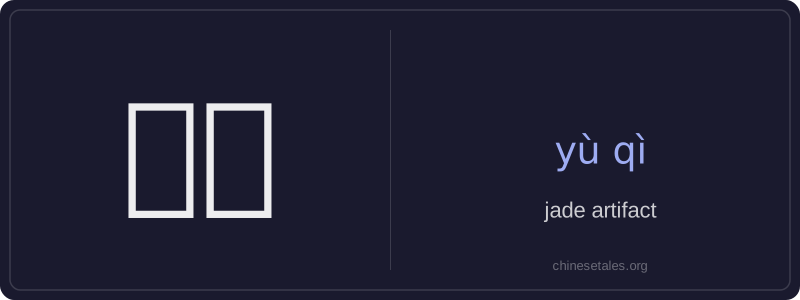
‘Yù qì’ literally means ‘jade vessel’ or ‘jade object’, combining 玉 (yù), meaning ‘jade’—a precious, culturally revered stone in China—and 器 (qì), meaning ‘tool’, ‘utensil’, or ‘artifact’. Together, the term refers broadly to any crafted object made from jade, especially those with historical, ritual, artistic, or ceremonial significance. Unlike everyday items, yù qì are typically finely carved and symbolize purity, virtue, and nobility in traditional Chinese culture.
These artifacts include ancient bi discs, cong tubes, ornamental pendants, ritual blades, and decorative pieces found in tombs and museums. While modern jewelry may use jade, the term yù qì is reserved for culturally meaningful objects—not casual accessories or imitations. It appears frequently in archaeology, art history, and museum contexts, often paired with terms like ‘ancient’ (古), ‘ritual’ (礼), or ‘Neolithic’ (新石器时代).
Example Sentences
Related Words
国语
‘Guó yǔ’ literally means 'national language'—
无论谁
‘无论谁’ (wú lùn shéi) is a pronoun meaning
外语
‘外语’ literally means ‘outside language’ —
面条
‘面条’ (miàn tiáo) literally means ‘flour str
认同
‘认同’ (tóng rèn) is a verb meaning ‘to ident
不对
不对 (bù duì) literally combines 不 (bù), meani
认为
‘认为’ (rèn wéi) is a transitive verb meaning
违规
违规 (wéi guī) literally means 'to violate rules