Word Explanation
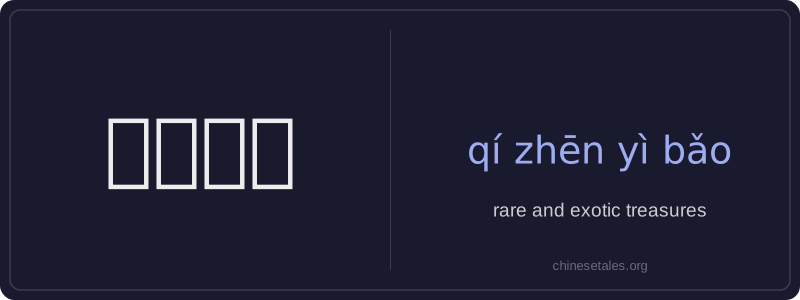
‘奇珍异宝’ literally combines four characters: 奇 (qí, 'rare or extraordinary'), 珍 (zhēn, 'precious or valuable'), 异 (yì, 'unusual or exotic'), and 宝 (bǎo, 'treasure or precious thing'). Together, they form a literary, slightly formal noun meaning 'rare and exotic treasures' — items that are both exceptionally valuable and uncommon, often with cultural, historical, or natural significance. The phrase emphasizes uniqueness and rarity more than mere monetary worth.
This term appears frequently in classical literature, museum descriptions, travel writing, and news reports about archaeological finds or endangered species. It commonly refers to natural wonders (e.g., rare orchids, ancient fossils, exotic animals like snow leopards) as well as man-made artifacts (e.g., imperial jade carvings, Ming dynasty porcelain). Because of its elevated register, it’s rarely used in casual speech but fits well in descriptive, appreciative, or authoritative contexts.
Example Sentences
Related Words
国语
‘Guó yǔ’ literally means 'national language'—
无论谁
‘无论谁’ (wú lùn shéi) is a pronoun meaning
外语
‘外语’ literally means ‘outside language’ —
面条
‘面条’ (miàn tiáo) literally means ‘flour str
认同
‘认同’ (tóng rèn) is a verb meaning ‘to ident
不对
不对 (bù duì) literally combines 不 (bù), meani
认为
‘认为’ (rèn wéi) is a transitive verb meaning
违规
违规 (wéi guī) literally means 'to violate rules