Word Explanation
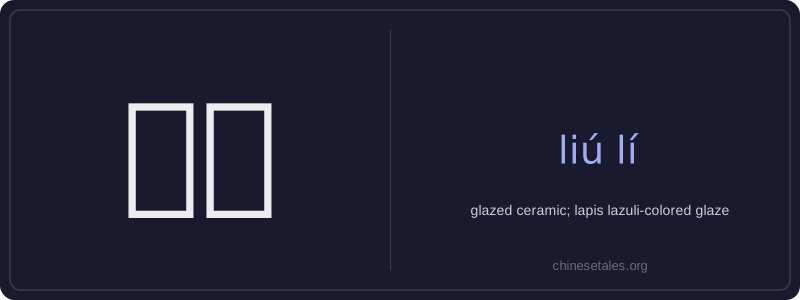
琉璃 (liú lí) is a noun referring to a type of vibrant, translucent glazed ceramic traditionally used in Chinese architecture—especially on imperial rooftops, eaves, and decorative tiles. The word combines two characters, both pronounced liú lí, each evoking qualities of brilliance and clarity: 琉 suggests flowing luster, while 璃 connotes crystalline purity. Historically, it was associated with lapis lazuli’s deep blue hue, though modern琉璃 can appear in green, yellow, white, or purple.
Today, 琉璃 appears in cultural contexts like temple restoration, museum exhibits, and artisan crafts. It carries strong aesthetic and symbolic weight—representing dignity, protection, and harmony—and is often mentioned alongside traditional Chinese building techniques or heritage conservation. While not used for everyday objects, it frequently appears in descriptions of historical sites, art history texts, and tourism materials.
Example Sentences
Related Words
国语
‘Guó yǔ’ literally means 'national language'—
无论谁
‘无论谁’ (wú lùn shéi) is a pronoun meaning
外语
‘外语’ literally means ‘outside language’ —
面条
‘面条’ (miàn tiáo) literally means ‘flour str
认同
‘认同’ (tóng rèn) is a verb meaning ‘to ident
不对
不对 (bù duì) literally combines 不 (bù), meani
认为
‘认为’ (rèn wéi) is a transitive verb meaning
违规
违规 (wéi guī) literally means 'to violate rules