Word Explanation
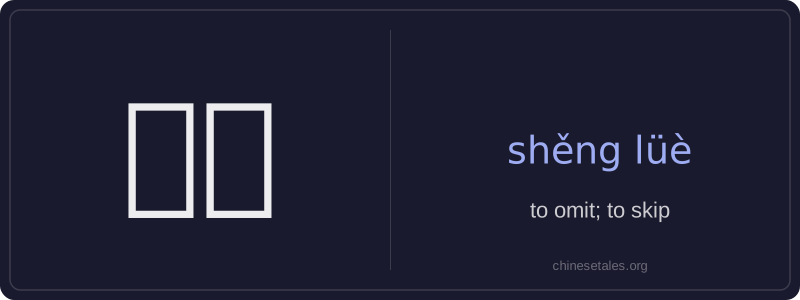
省略 means 'to omit' or 'to skip' — it refers to intentionally leaving out something considered unnecessary, redundant, or understood from context. The character 省 (shěng) carries meanings like 'to save', 'to economize', or 'to examine carefully', while 略 (lüè) means 'brief', 'concise', or 'to neglect'. Together, they form a verb emphasizing deliberate reduction or exclusion for efficiency or clarity. It’s commonly used in writing, speech, grammar, and daily communication — for instance, omitting pronouns in Chinese sentences where the subject is clear, skipping steps in instructions, or leaving out obvious information in conversation.
This word is neutral in register and appears frequently in both formal and informal contexts, though it’s more common in written language and explanations of language structure. It often appears in grammatical discussions (e.g., subject omission in Chinese) or practical advice (e.g., skipping unnecessary details in reports). Unlike casual terms like 'skip', 省略 implies purposeful, reasoned exclusion — not carelessness or haste.
Example Sentences
Related Words
国语
‘Guó yǔ’ literally means 'national language'—
无论谁
‘无论谁’ (wú lùn shéi) is a pronoun meaning
外语
‘外语’ literally means ‘outside language’ —
面条
‘面条’ (miàn tiáo) literally means ‘flour str
认同
‘认同’ (tóng rèn) is a verb meaning ‘to ident
不对
不对 (bù duì) literally combines 不 (bù), meani
认为
‘认为’ (rèn wéi) is a transitive verb meaning
违规
违规 (wéi guī) literally means 'to violate rules