Word Explanation
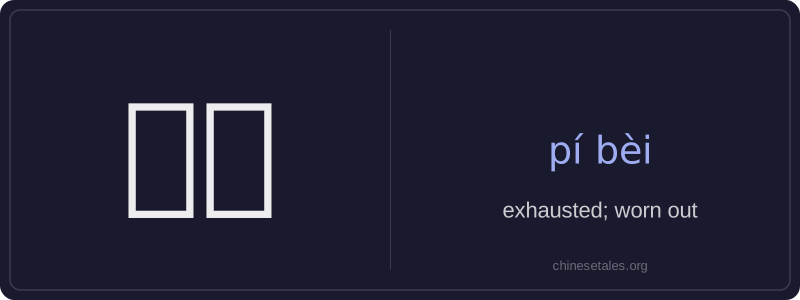
疲惫 is an adjective meaning 'exhausted' or 'worn out' — describing a state of extreme physical or mental tiredness, often after prolonged effort, stress, or lack of rest. The character 疲 (pí) means 'tired' or 'fatigued', and 惫 (bèi) intensifies the sense, carrying connotations of depletion and exhaustion. Together, they form a compound that emphasizes deep, overwhelming weariness — stronger than just 累 (lèi) and more formal or literary than everyday terms like 困 (kùn).
This word is commonly used in written Chinese and formal speech, especially when describing the aftermath of demanding work, illness, travel, or emotional strain. It often appears in contexts involving health recovery, workplace well-being, or personal reflection. While it can describe people directly (e.g., 他看起来很疲惫), it’s also frequently used attributively before nouns (e.g., 疲惫的身体, 'exhausted body') or predicatively with 是...的 or 很 structures.
Example Sentences
Related Words
国语
‘Guó yǔ’ literally means 'national language'—
无论谁
‘无论谁’ (wú lùn shéi) is a pronoun meaning
外语
‘外语’ literally means ‘outside language’ —
面条
‘面条’ (miàn tiáo) literally means ‘flour str
认同
‘认同’ (tóng rèn) is a verb meaning ‘to ident
不对
不对 (bù duì) literally combines 不 (bù), meani
认为
‘认为’ (rèn wéi) is a transitive verb meaning
违规
违规 (wéi guī) literally means 'to violate rules