Word Explanation
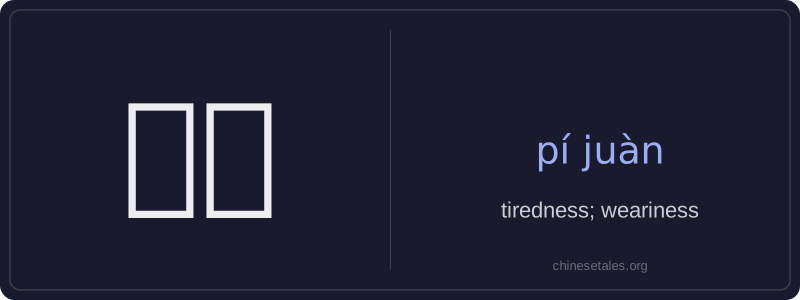
疲倦 is a compound word meaning 'tiredness' or 'weariness'—a physical or mental state of exhaustion. Both characters contribute to this meaning: 疲 (pí) means 'fatigue' or 'to tire', often implying bodily strain, while 倦 (juàn) conveys 'weariness', 'lassitude', or 'loss of enthusiasm', carrying a slightly more psychological or emotional nuance. Together, they reinforce each other, forming a common, neutral-term noun or adjective describing a deep, often prolonged sense of being drained.
This word appears frequently in everyday speech and writing to describe how someone feels after long work hours, illness, lack of sleep, or emotionally taxing situations. It’s more formal and literary than colloquial alternatives like 累 (lèi), and it often implies a heavier, more sustained fatigue—not just momentary tiredness. While it can modify nouns (e.g., 疲倦的眼神 'tired eyes'), it most commonly follows verbs like 感到, 显得, or 是 to describe a state.
Example Sentences
Related Words
国语
‘Guó yǔ’ literally means 'national language'—
无论谁
‘无论谁’ (wú lùn shéi) is a pronoun meaning
外语
‘外语’ literally means ‘outside language’ —
面条
‘面条’ (miàn tiáo) literally means ‘flour str
认同
‘认同’ (tóng rèn) is a verb meaning ‘to ident
不对
不对 (bù duì) literally combines 不 (bù), meani
认为
‘认为’ (rèn wéi) is a transitive verb meaning
违规
违规 (wéi guī) literally means 'to violate rules