Word Explanation
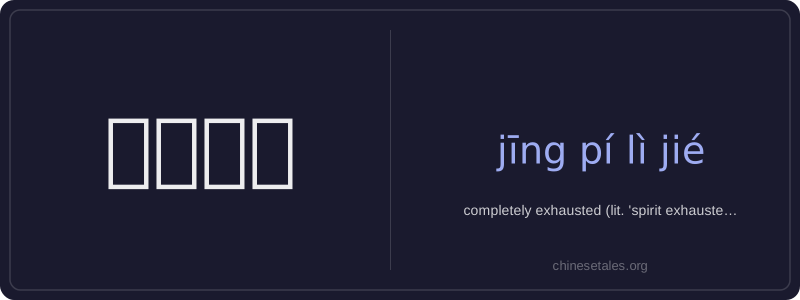
精疲力竭 is an idiomatic four-character adjective meaning 'completely exhausted'—physically, mentally, or emotionally. Literally, it breaks down as 精 (jīng, 'vital spirit' or 'mental energy'), 疲 (pí, 'tired' or 'fatigued'), 力 (lì, 'physical strength'), and 竭 (jié, 'exhausted' or 'depleted'). Together, they convey total depletion of both inner vitality and outward stamina—a state beyond ordinary tiredness.
This expression is commonly used in formal writing, literature, news reports, and serious spoken contexts to emphasize extreme exhaustion after prolonged effort, intense stress, or demanding physical activity. It carries a slightly literary tone and is stronger than everyday terms like 累 (lèi) or 疲劳 (píláo). While not slang, it’s widely understood and frequently appears in descriptions of athletes, caregivers, disaster responders, or students pulling all-nighters before major exams.
Example Sentences
Related Words
国语
‘Guó yǔ’ literally means 'national language'—
无论谁
‘无论谁’ (wú lùn shéi) is a pronoun meaning
外语
‘外语’ literally means ‘outside language’ —
面条
‘面条’ (miàn tiáo) literally means ‘flour str
认同
‘认同’ (tóng rèn) is a verb meaning ‘to ident
不对
不对 (bù duì) literally combines 不 (bù), meani
认为
‘认为’ (rèn wéi) is a transitive verb meaning
违规
违规 (wéi guī) literally means 'to violate rules