Word Explanation
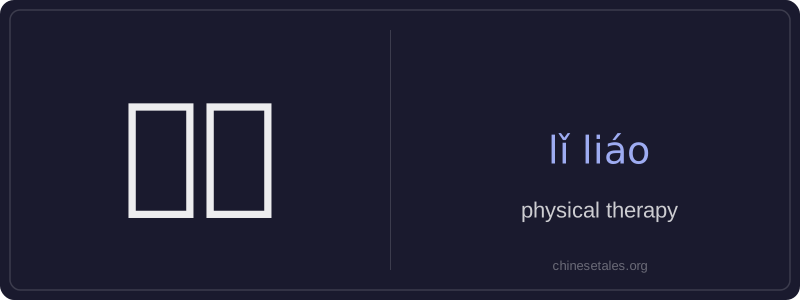
‘理疗’ (lǐ liáo) is a noun meaning ‘physical therapy’ — the medical treatment of injury, illness, or disability using non-invasive physical methods such as heat, cold, electricity, exercise, massage, or ultrasound. The first character 理 (lǐ) means ‘reason,’ ‘principle,’ or ‘to manage/arrange,’ and here implies systematic, science-based intervention; the second character 疗 (liáo) means ‘to treat’ or ‘therapy.’ Together, they convey the idea of ‘principled treatment’ — reflecting the structured, evidence-informed nature of this healthcare discipline.
This term is widely used in hospitals, rehabilitation centers, and clinics across China. It’s commonly prescribed by doctors for conditions like post-surgical recovery, sports injuries, chronic pain (e.g., lower back pain), stroke rehabilitation, or mobility limitations after accidents. Unlike traditional Chinese medicine treatments such as acupuncture or herbal therapy, 理疗 specifically refers to Western-style physiotherapeutic modalities, though some integrated clinics may combine both approaches.
Example Sentences
Related Words
国语
‘Guó yǔ’ literally means 'national language'—
无论谁
‘无论谁’ (wú lùn shéi) is a pronoun meaning
外语
‘外语’ literally means ‘outside language’ —
面条
‘面条’ (miàn tiáo) literally means ‘flour str
认同
‘认同’ (tóng rèn) is a verb meaning ‘to ident
不对
不对 (bù duì) literally combines 不 (bù), meani
认为
‘认为’ (rèn wéi) is a transitive verb meaning
违规
违规 (wéi guī) literally means 'to violate rules