Word Explanation
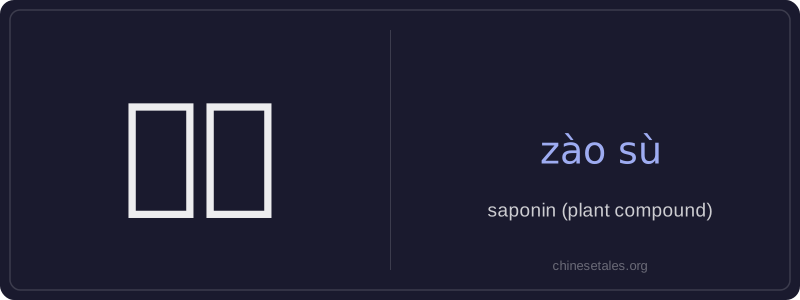
‘皂素’ (zào sù) is a scientific term referring to saponins — naturally occurring plant compounds known for their soap-like foaming properties when shaken in water. The character 皂 (zào) originally means ‘soap’ or ‘black’ (historically linked to soot-based cleaning agents), while 素 (sù) means ‘substance’, ‘element’, or ‘compound’, commonly used in chemistry and biology (e.g., 维生素 wéishēngsù ‘vitamin’). Together, they literally convey ‘soap substance’, reflecting the compound’s surfactant behavior.
Saponins are found in many plants — such as soybeans, ginseng, and quinoa — and are studied for potential health benefits including anti-inflammatory and cholesterol-lowering effects. In Chinese scientific, medical, and herbal contexts, 皂素 appears in research papers, supplement labels, and discussions of traditional medicine pharmacology. It is a formal, technical term rarely used in everyday conversation and almost never outside academic, pharmaceutical, or botanical domains.
Example Sentences
Related Words
国语
‘Guó yǔ’ literally means 'national language'—
无论谁
‘无论谁’ (wú lùn shéi) is a pronoun meaning
外语
‘外语’ literally means ‘outside language’ —
面条
‘面条’ (miàn tiáo) literally means ‘flour str
认同
‘认同’ (tóng rèn) is a verb meaning ‘to ident
不对
不对 (bù duì) literally combines 不 (bù), meani
认为
‘认为’ (rèn wéi) is a transitive verb meaning
违规
违规 (wéi guī) literally means 'to violate rules