Word Explanation
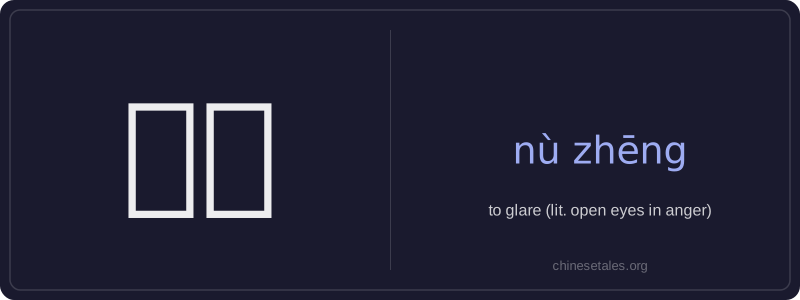
‘怒睁’ is a compound verb meaning 'to glare'—specifically, to open one’s eyes wide in anger or intense indignation. The first character 怒 (nù) means 'anger' or 'fury', and the second character 睁 (zhēng) means 'to open (the eyes)'. Together, they vividly convey the physical manifestation of rage: flared nostrils may accompany it, but the defining action is the forceful, wide-eyed stare that signals suppressed or erupting fury. It’s more dramatic and literary than everyday verbs like ‘瞪’ (dèng, to stare), often appearing in descriptive writing, fiction, or dramatic dialogue.
This word emphasizes intensity and emotional charge rather than mere visual focus. It’s commonly used to depict characters—human or animal—who are confronting a threat, expressing outrage, or preparing for confrontation. Because it carries strong emotional weight and a slightly archaic or stylistic tone, it appears more frequently in written narratives than casual speech. Learners should note that it’s almost always followed by an object (e.g., 怒睁双眼) or used in a predicate position with adverbial modifiers.
Example Sentences
Related Words
国语
‘Guó yǔ’ literally means 'national language'—
无论谁
‘无论谁’ (wú lùn shéi) is a pronoun meaning
外语
‘外语’ literally means ‘outside language’ —
面条
‘面条’ (miàn tiáo) literally means ‘flour str
认同
‘认同’ (tóng rèn) is a verb meaning ‘to ident
不对
不对 (bù duì) literally combines 不 (bù), meani
认为
‘认为’ (rèn wéi) is a transitive verb meaning
违规
违规 (wéi guī) literally means 'to violate rules