Word Explanation
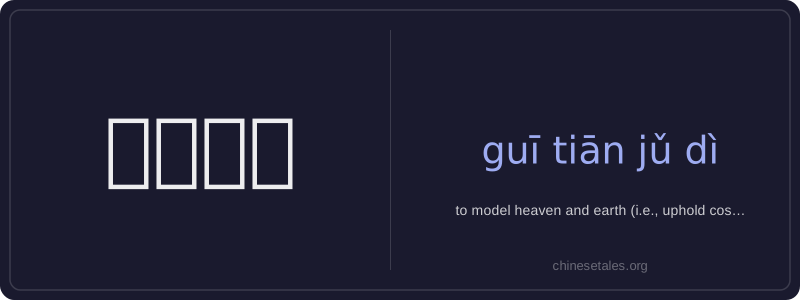
‘规天矩地’ is a classical Chinese idiom meaning ‘to model heaven and earth’ — symbolizing the act of aligning human conduct, institutions, or designs with the fundamental order and harmony of the cosmos. Literally, 规 (guī) means ‘compass’, used to draw circles representing heaven’s roundness and cyclical nature; 矩 (jǔ) means ‘carpenter’s square’, used to draw right angles symbolizing earth’s stability and rectitude. Together, they evoke ancient cosmological principles where moral virtue, architecture, ritual, and governance were all expected to mirror the balanced, just patterns of heaven and earth.
This phrase appears primarily in literary, philosophical, or historical contexts — especially when praising sage rulers, Confucian scholars, or grand architectural projects that embody cosmic harmony. It carries strong connotations of reverence, discipline, and idealism, and is rarely used in casual speech. Modern usage is almost exclusively rhetorical or poetic, often found in formal writing, inscriptions, or scholarly discourse on traditional Chinese thought.
Example Sentences
Related Words
国语
‘Guó yǔ’ literally means 'national language'—
无论谁
‘无论谁’ (wú lùn shéi) is a pronoun meaning
外语
‘外语’ literally means ‘outside language’ —
面条
‘面条’ (miàn tiáo) literally means ‘flour str
认同
‘认同’ (tóng rèn) is a verb meaning ‘to ident
不对
不对 (bù duì) literally combines 不 (bù), meani
认为
‘认为’ (rèn wéi) is a transitive verb meaning
违规
违规 (wéi guī) literally means 'to violate rules