Word Explanation
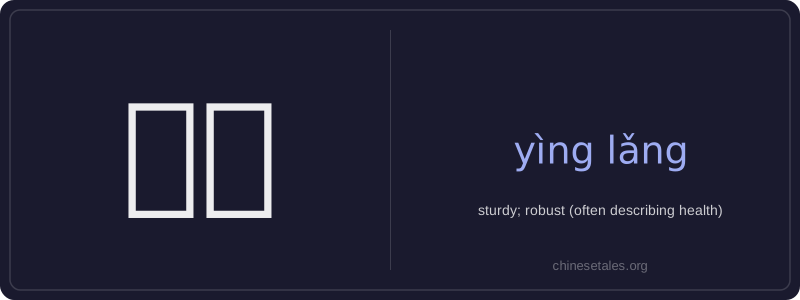
硬朗 (yìng lǎng) is an adjective describing someone—usually older—who is physically strong, healthy, and energetic despite age. Literally, 硬 means 'hard' or 'firm', suggesting resilience and solidity, while 朗 means 'bright', 'clear', or 'cheerful', conveying vitality and mental alertness. Together, they evoke a person whose body is firm and whose spirit is bright—hence 'sturdy' or 'robust' in health.
This term is commonly used to praise elders who remain active and independent: it carries warmth and respect, often appearing in family conversations, health reports, or news about long-lived individuals. It’s rarely applied to young people (who are simply called 健康 or 强壮) or to inanimate objects. The word implies enduring physical capability combined with mental clarity, making it especially fitting for describing healthy aging.
Example Sentences
Related Words
国语
‘Guó yǔ’ literally means 'national language'—
无论谁
‘无论谁’ (wú lùn shéi) is a pronoun meaning
外语
‘外语’ literally means ‘outside language’ —
面条
‘面条’ (miàn tiáo) literally means ‘flour str
认同
‘认同’ (tóng rèn) is a verb meaning ‘to ident
不对
不对 (bù duì) literally combines 不 (bù), meani
认为
‘认为’ (rèn wéi) is a transitive verb meaning
违规
违规 (wéi guī) literally means 'to violate rules