Word Explanation
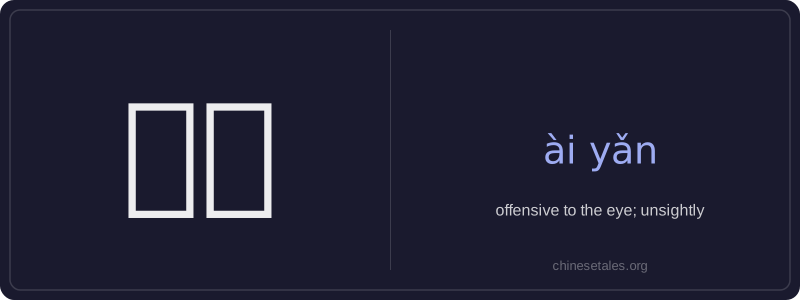
Ài yǎn literally combines 碍 (‘to hinder, obstruct’) and 眼 (‘eye’), suggesting something that ‘hinders the eye’—i.e., visually jarring or unpleasant to look at. It describes objects, people, or scenes perceived as unsightly, intrusive, or aesthetically offensive—not necessarily morally wrong, but grating on visual sensibility. The term carries mild disapproval and is often used subjectively, reflecting personal taste or social expectations about order and appearance.
This adjective is commonly used in spoken and written Mandarin to express irritation or distaste toward visual clutter, mismatched elements, or socially awkward presences—for example, a messy desk, ill-fitting clothing, or an uninvited guest lingering where they’re not welcome. While it can describe physical appearances, it’s rarely used for serious flaws; instead, it conveys a light-to-moderate sense of ‘grating on the eyes’ or ‘better out of sight.’ It functions predicatively (e.g., 这堆垃圾真碍眼) and occasionally attributively with 的, though less frequently.
Example Sentences
Related Words
国语
‘Guó yǔ’ literally means 'national language'—
无论谁
‘无论谁’ (wú lùn shéi) is a pronoun meaning
外语
‘外语’ literally means ‘outside language’ —
面条
‘面条’ (miàn tiáo) literally means ‘flour str
认同
‘认同’ (tóng rèn) is a verb meaning ‘to ident
不对
不对 (bù duì) literally combines 不 (bù), meani
认为
‘认为’ (rèn wéi) is a transitive verb meaning
违规
违规 (wéi guī) literally means 'to violate rules