Word Explanation
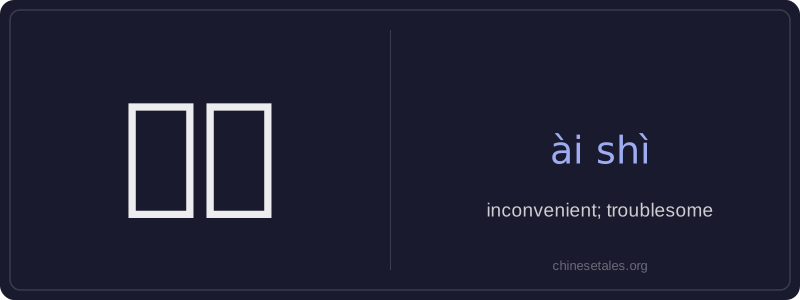
àishì is an adjective meaning 'inconvenient' or 'troublesome', describing something or someone that gets in the way, hinders progress, or creates unnecessary difficulty. The character 碍 (ài) means 'to hinder' or 'to obstruct', while 事 (shì) means 'matter' or 'affair'; together, they literally suggest 'a matter that hinders'. It’s commonly used to describe objects, people, or situations that interfere with efficiency, comfort, or smooth operation — for example, clutter in a workspace or an uninvited guest during a serious discussion.
This word carries a mild, everyday tone and is often used in spoken and written Chinese alike. It’s not strongly negative like 'obnoxious' but conveys practical annoyance — more about functional disruption than moral judgment. It frequently appears after 是 (shì) or 很 (hěn), or in phrases like 太碍事 (tài ài shì, 'too inconvenient') or 不要碍事 (bùyào ài shì, 'don’t get in the way').
Example Sentences
Related Words
国语
‘Guó yǔ’ literally means 'national language'—
无论谁
‘无论谁’ (wú lùn shéi) is a pronoun meaning
外语
‘外语’ literally means ‘outside language’ —
面条
‘面条’ (miàn tiáo) literally means ‘flour str
认同
‘认同’ (tóng rèn) is a verb meaning ‘to ident
不对
不对 (bù duì) literally combines 不 (bù), meani
认为
‘认为’ (rèn wéi) is a transitive verb meaning
违规
违规 (wéi guī) literally means 'to violate rules