Word Explanation
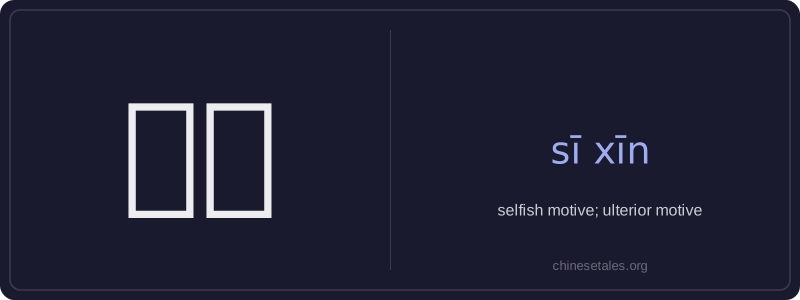
‘私心’ literally combines ‘私’ (sī), meaning ‘private,’ ‘personal,’ or ‘selfish,’ and ‘心’ (xīn), meaning ‘heart’ or ‘mind.’ Together, it refers to a hidden, self-serving motive—something one desires or intends for personal gain rather than for fairness, duty, or the common good. It carries a mildly negative connotation, implying a lack of impartiality or sincerity.
This term is commonly used in discussions about ethics, leadership, relationships, or decision-making—especially when questioning someone’s integrity or transparency. While not as harsh as ‘贪心’ (greed) or ‘虚伪’ (hypocrisy), ‘私心’ suggests a subtle but consequential bias rooted in self-interest. It often appears in formal writing, news commentary, and moral reflection, and is rarely used in casual small talk unless critiquing behavior.
Example Sentences
Related Words
国语
‘Guó yǔ’ literally means 'national language'—
无论谁
‘无论谁’ (wú lùn shéi) is a pronoun meaning
外语
‘外语’ literally means ‘outside language’ —
面条
‘面条’ (miàn tiáo) literally means ‘flour str
认同
‘认同’ (tóng rèn) is a verb meaning ‘to ident
不对
不对 (bù duì) literally combines 不 (bù), meani
认为
‘认为’ (rèn wéi) is a transitive verb meaning
违规
违规 (wéi guī) literally means 'to violate rules