Word Explanation
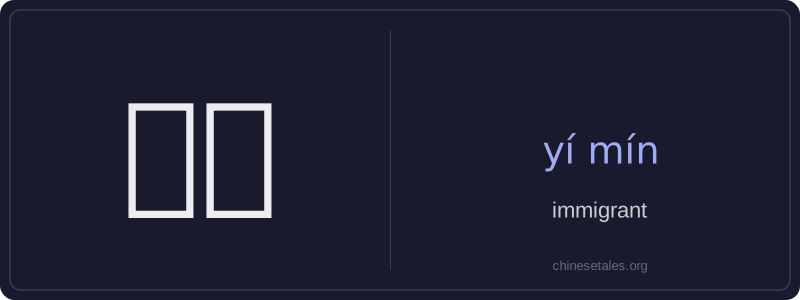
‘移民’ (yí mín) literally combines ‘移’ (yí), meaning ‘to move’ or ‘to relocate’, and ‘民’ (mín), meaning ‘people’ or ‘citizens’. Together, it refers to a person who permanently moves from one country or region to settle in another. Unlike temporary migrants such as students or workers on short-term visas, an ‘immigrant’ intends to establish long-term residence—often seeking citizenship, employment, family reunification, or safety. The term carries legal and sociocultural weight, commonly appearing in discussions about immigration policy, integration, and diaspora communities.
In Chinese usage, ‘移民’ is neutral in tone but context-dependent: official documents use it formally, while media may pair it with modifiers like ‘合法移民’ (legal immigrant) or ‘非法移民’ (illegal immigrant). It is distinct from ‘移民者’ (a more explicit noun form, rarely used) and does not imply ethnicity—it focuses solely on the act and status of relocation across national boundaries.
Example Sentences
Related Words
国语
‘Guó yǔ’ literally means 'national language'—
无论谁
‘无论谁’ (wú lùn shéi) is a pronoun meaning
外语
‘外语’ literally means ‘outside language’ —
面条
‘面条’ (miàn tiáo) literally means ‘flour str
认同
‘认同’ (tóng rèn) is a verb meaning ‘to ident
不对
不对 (bù duì) literally combines 不 (bù), meani
认为
‘认为’ (rèn wéi) is a transitive verb meaning
违规
违规 (wéi guī) literally means 'to violate rules