Word Explanation
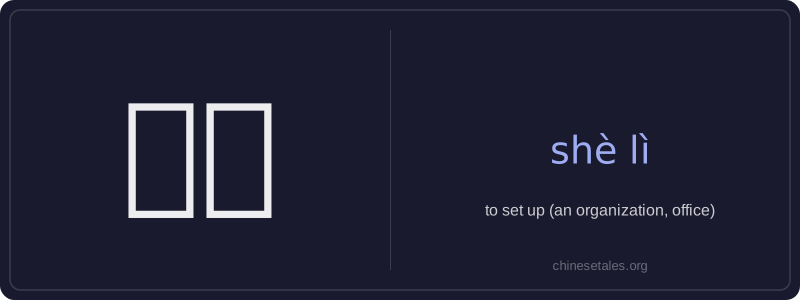
设立 (shè lì) is a formal, transitive verb meaning 'to set up,' 'to establish,' or 'to found'—typically referring to institutions, offices, organizations, branches, or official positions. The character 设 (shè) means 'to arrange' or 'to plan,' while 立 (lì) means 'to stand' or 'to erect'; together, they convey the idea of deliberately putting something into place with permanence and official recognition. It’s commonly used in administrative, governmental, business, and educational contexts.
This word implies intentionality, legitimacy, and often legal or institutional approval—unlike more casual alternatives like 开 (kāi, 'to open') or 建 (jiàn, 'to build'). It frequently appears in news reports, policy documents, and formal announcements. While it can occasionally refer to physical locations (e.g., an office), its core sense is organizational creation—not merely opening a shop or starting an activity. It’s rarely used for abstract concepts like ideas or feelings, and never for natural phenomena or living beings.
Example Sentences
Related Words
国语
‘Guó yǔ’ literally means 'national language'—
无论谁
‘无论谁’ (wú lùn shéi) is a pronoun meaning
外语
‘外语’ literally means ‘outside language’ —
面条
‘面条’ (miàn tiáo) literally means ‘flour str
认同
‘认同’ (tóng rèn) is a verb meaning ‘to ident
不对
不对 (bù duì) literally combines 不 (bù), meani
认为
‘认为’ (rèn wéi) is a transitive verb meaning
违规
违规 (wéi guī) literally means 'to violate rules