Word Explanation
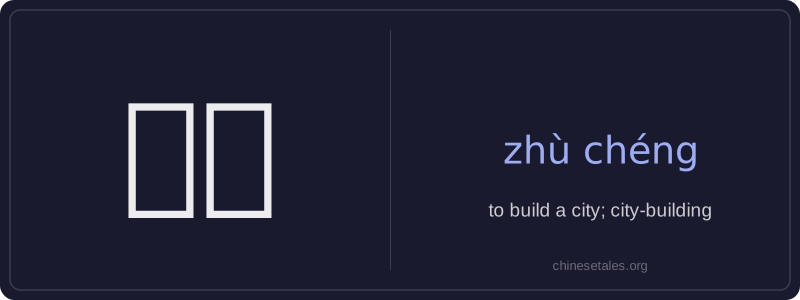
‘筑城’ literally means ‘to build a city’ — combining 筑 (zhù), meaning ‘to construct, to build’, and 城 (chéng), meaning ‘city’ or ‘walled town’. Historically, it referred to the physical construction of fortified urban centers, especially during ancient and imperial China, when cities required defensive walls, gates, and infrastructure. The term evokes imagery of large-scale, organized civic development, often involving labor, planning, and state authority.
Today, ‘筑城’ is used more figuratively or in formal, literary, or historical contexts — for example, in discussions of urban development, cultural heritage, or national strategy. It rarely appears in casual speech; instead, modern everyday usage prefers phrases like ‘建设城市’ (jiànshè chéngshì, ‘to develop/build a city’) or ‘建城’ (jiàn chéng). As a compound verb, it’s typically transitive and often paired with time or purpose adverbials (e.g., ‘自古以来就筑城’, ‘为防御而筑城’).
Example Sentences
Related Words
国语
‘Guó yǔ’ literally means 'national language'—
无论谁
‘无论谁’ (wú lùn shéi) is a pronoun meaning
外语
‘外语’ literally means ‘outside language’ —
面条
‘面条’ (miàn tiáo) literally means ‘flour str
认同
‘认同’ (tóng rèn) is a verb meaning ‘to ident
不对
不对 (bù duì) literally combines 不 (bù), meani
认为
‘认为’ (rèn wéi) is a transitive verb meaning
违规
违规 (wéi guī) literally means 'to violate rules