Word Explanation
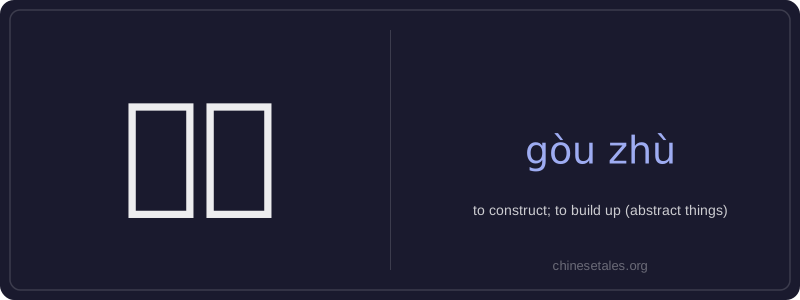
构筑 (gòu zhù) is a formal, written verb meaning 'to construct' or 'to build up,' especially abstract things like systems, relationships, theories, defenses, or ideals. Though both characters individually mean 'to build'—构 (gòu) suggests 'to devise' or 'to frame,' and 筑 (zhù) means 'to build' or 'to erect'—together they emphasize deliberate, often large-scale or conceptual construction. It’s rarely used for physical buildings (where 建造 or 建设 is preferred), but common in political, academic, and literary contexts.
The word carries a sense of intentionality and effort: you don’t casually 构筑 something—you plan, coordinate, and sustain it over time. It frequently appears in collocations like 构筑防线 (build a defense line), 构筑信任 (build trust), or 构筑未来 (build the future). Because of its elevated register, it’s uncommon in everyday spoken Chinese and more typical in speeches, policy documents, essays, or news reports.
Example Sentences
Related Words
国语
‘Guó yǔ’ literally means 'national language'—
无论谁
‘无论谁’ (wú lùn shéi) is a pronoun meaning
外语
‘外语’ literally means ‘outside language’ —
面条
‘面条’ (miàn tiáo) literally means ‘flour str
认同
‘认同’ (tóng rèn) is a verb meaning ‘to ident
不对
不对 (bù duì) literally combines 不 (bù), meani
认为
‘认为’ (rèn wéi) is a transitive verb meaning
违规
违规 (wéi guī) literally means 'to violate rules