Word Explanation
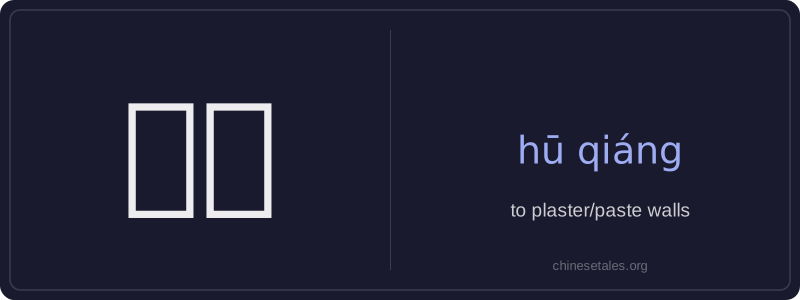
‘糊墙’ (hū qiáng) is a verb meaning ‘to plaster’ or ‘to paste walls’, typically referring to the process of applying wallpaper, rice paper, or traditional paste-based coverings to wall surfaces. The first character 糊 (hū) means ‘to paste’ or ‘to glue’—here pronounced with first tone, distinct from the more common third-tone reading hú (meaning ‘confused’ or ‘porridge’). The second character 墙 (qiáng) simply means ‘wall’. Together, they describe a specific manual task in home renovation, interior decoration, or traditional craftsmanship.
This term is commonly used in contexts involving DIY home improvement, historical building restoration, or rural construction where adhesive pastes (e.g., flour-based paste) are still employed. It implies surface preparation and careful application—not merely hanging wallpaper but securing it evenly and smoothly. While modern usage sometimes overlaps with 贴墙 (tiē qiáng), 糊墙 carries a stronger connotation of using wet, sticky paste rather than peel-and-stick adhesives.
Example Sentences
Related Words
国语
‘Guó yǔ’ literally means 'national language'—
无论谁
‘无论谁’ (wú lùn shéi) is a pronoun meaning
外语
‘外语’ literally means ‘outside language’ —
面条
‘面条’ (miàn tiáo) literally means ‘flour str
认同
‘认同’ (tóng rèn) is a verb meaning ‘to ident
不对
不对 (bù duì) literally combines 不 (bù), meani
认为
‘认为’ (rèn wéi) is a transitive verb meaning
违规
违规 (wéi guī) literally means 'to violate rules