Word Explanation
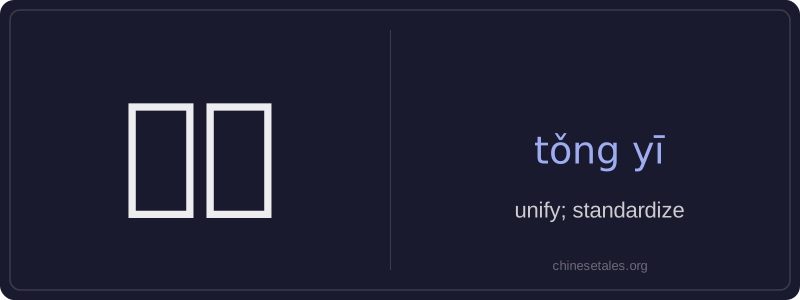
统一 (tǒng yī) is a verb meaning 'to unify' or 'to standardize.' The character 统 (tǒng) conveys the idea of overall control, coordination, or integration, while 一 (yī) means 'one' — together they express bringing separate elements into a single, consistent system. It emphasizes harmonization, consolidation, or alignment under one standard, authority, or framework.
This word is commonly used in political, administrative, technical, and organizational contexts — for example, unifying national policies, standardizing product specifications, or integrating educational curricula across regions. It often carries formal or official connotations and appears frequently in news reports, government documents, and business communications. While it can describe physical unification (e.g., merging institutions), its core sense is functional or systemic coherence rather than mere physical joining.
Example Sentences
Related Words
国语
‘Guó yǔ’ literally means 'national language'—
无论谁
‘无论谁’ (wú lùn shéi) is a pronoun meaning
外语
‘外语’ literally means ‘outside language’ —
面条
‘面条’ (miàn tiáo) literally means ‘flour str
认同
‘认同’ (tóng rèn) is a verb meaning ‘to ident
违规
违规 (wéi guī) literally means 'to violate rules
不对
不对 (bù duì) literally combines 不 (bù), meani
认为
‘认为’ (rèn wéi) is a transitive verb meaning