Word Explanation
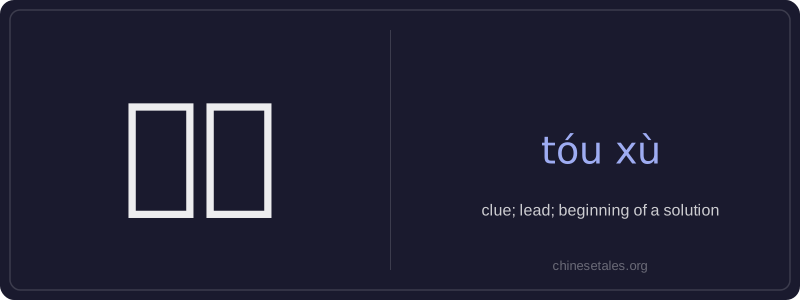
‘头绪’ literally combines ‘头’ (tóu, ‘head’) and ‘绪’ (xù, ‘thread’ or ‘end of a filament’), evoking the image of the beginning end of a thread — something you can grasp to start unraveling a complex situation. It refers to an initial clue, a starting point, or the first glimmer of understanding when facing confusion, disorder, or a complicated problem. It’s often used in contexts where someone is trying to make sense of scattered information, solve a puzzle, organize chaotic tasks, or find direction after feeling lost.
This word carries a slightly formal or literary tone and appears frequently in written Chinese and thoughtful spoken language — for example, when describing problem-solving at work, studying a difficult subject, or untangling personal dilemmas. It implies that clarity is still emerging and effort is needed to follow the ‘thread’ to a fuller solution. Unlike more concrete nouns, ‘头绪’ emphasizes process and potential rather than a definitive answer.
Example Sentences
Related Words
国语
‘Guó yǔ’ literally means 'national language'—
无论谁
‘无论谁’ (wú lùn shéi) is a pronoun meaning
外语
‘外语’ literally means ‘outside language’ —
面条
‘面条’ (miàn tiáo) literally means ‘flour str
认同
‘认同’ (tóng rèn) is a verb meaning ‘to ident
违规
违规 (wéi guī) literally means 'to violate rules
亲笔
‘亲笔’ literally means ‘one’s own hand’—comb
不对
不对 (bù duì) literally combines 不 (bù), meani