Word Explanation
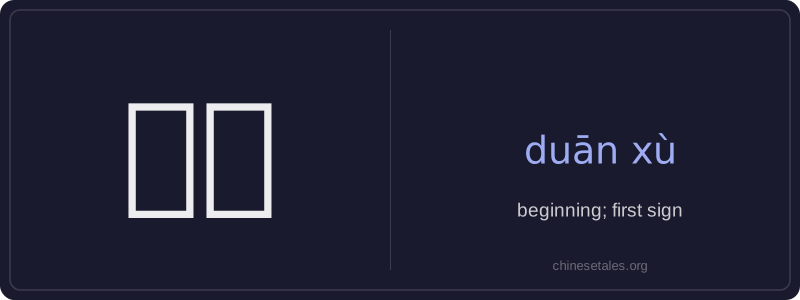
端绪 (duān xù) is a literary noun meaning 'the beginning' or 'first sign'—especially of something that is vague, emerging, or not yet fully formed. The character 端 (duān) means 'end', 'tip', or 'origin', suggesting a starting point; 绪 (xù) means 'thread' or 'clue', evoking the idea of an initial strand from which a larger pattern develops. Together, they form a compact, elegant expression for the earliest trace or hint of a development—often used when discussing ideas, problems, emotions, or situations just coming into focus.
This term appears frequently in formal writing, essays, and thoughtful speech—not in casual conversation. It carries a slightly refined, reflective tone and often implies that more will follow: once you detect the 端绪, you can begin to trace its evolution. It’s commonly paired with verbs like 找到 (to find), 发现 (to discover), or 捕捉 (to catch/grasp), emphasizing active perception of subtle beginnings.
Example Sentences
Related Words
国语
‘Guó yǔ’ literally means 'national language'—
无论谁
‘无论谁’ (wú lùn shéi) is a pronoun meaning
外语
‘外语’ literally means ‘outside language’ —
面条
‘面条’ (miàn tiáo) literally means ‘flour str
认同
‘认同’ (tóng rèn) is a verb meaning ‘to ident
违规
违规 (wéi guī) literally means 'to violate rules
亲笔
‘亲笔’ literally means ‘one’s own hand’—comb
不对
不对 (bù duì) literally combines 不 (bù), meani